How to Wash and Care for a Hand Block Printed Saree
A hand block printed saree is made differently from a machine-printed one, and it needs to be looked after differently too. The block, the dye and the hand behind both mean the print sits on the cloth in a way that rewards gentle handling and punishes shortcuts.
None of it is complicated. This guide covers washing, ironing, drying, storing and stain removal, with the settings and temperatures that actually matter for each fabric.
Before the First Wash
Read the product page note first. Composition changes what is safe — a pure cotton saree tolerates handling that a silk blend will not.
Check for loose threads, embellishment or a freshly stitched border, and work gently around them.
Treat the first wash as a test wash. Hand block printed sarees, especially those using natural dyes or resist techniques like Dabu, release a small amount of colour in the first one or two washes. This is normal for hand-dyed textiles. It does mean the first wash should always be done alone, in cold water.
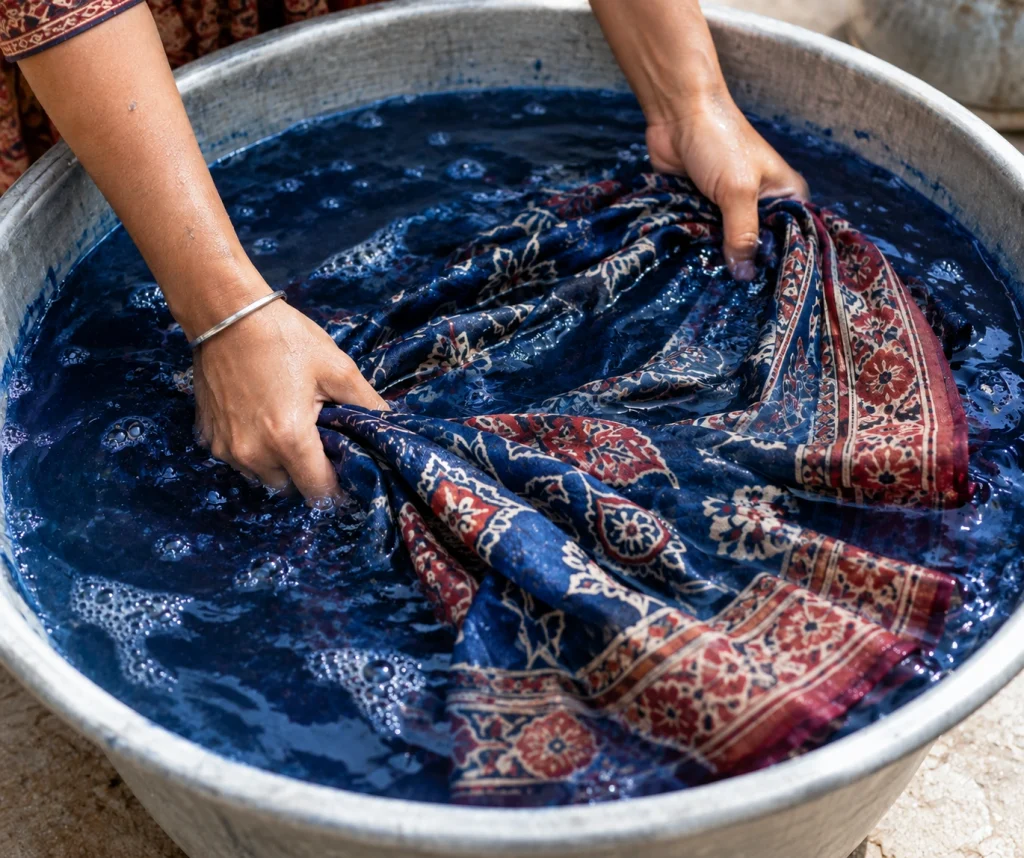
Dabu and indigo Dabu prints release more than most. Mud-resist dyeing simply behaves that way. Wash separately until the water runs mostly clear.
How to Wash a Saree at Home
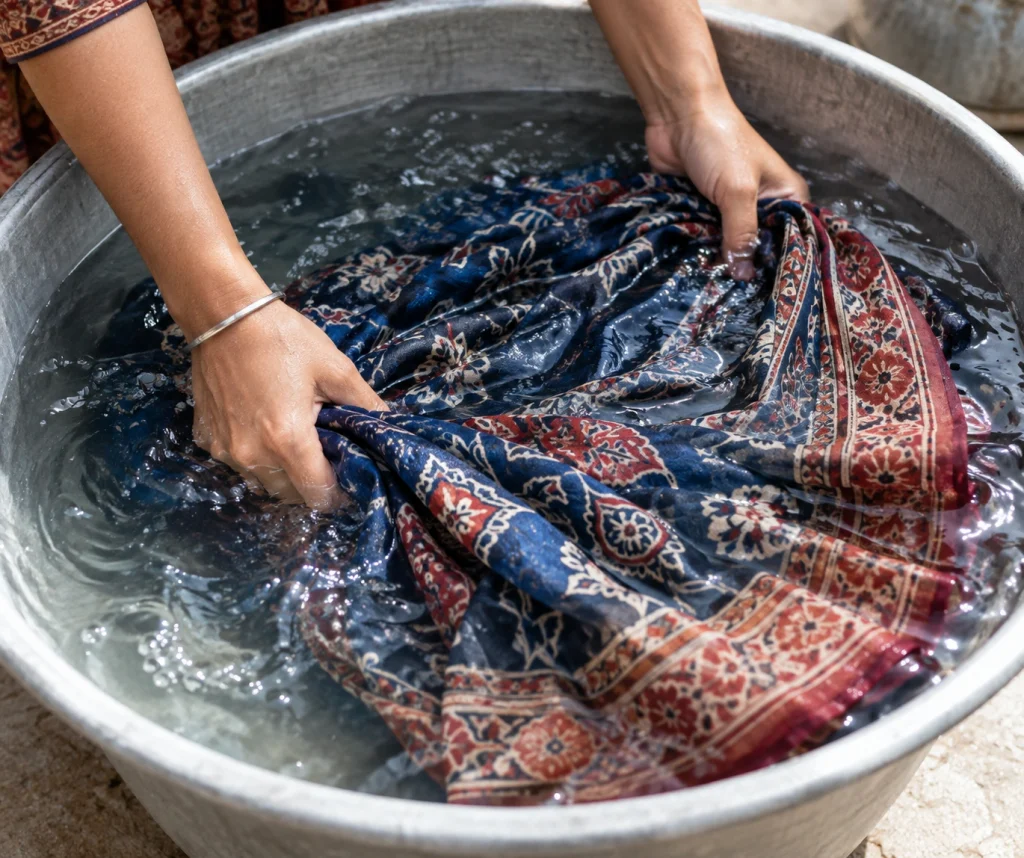
- Fill a tub with cold or lukewarm water. Avoid hot water — it accelerates colour loss and weakens natural dyes.
- Add a mild, pH-neutral detergent and mix it into the water before the saree goes in. Never pour detergent straight onto the fabric.
- Submerge and swirl gently for a few minutes. Do not scrub, twist or rub the printed area.
- Rinse in cold water until it runs clear.
- Press out water gently. Never wring or twist a hand block printed saree.
- Roll in a clean dry towel to absorb moisture before hanging.
How to Wash a Silk Saree at Home
Silk and silk-blend sarees — Maheshwari, Chanderi, modal silk — need more care than cotton, but most can still be washed at home.
Use cold water only, never lukewarm. Use a detergent made for delicates, or a very small amount of mild shampoo. Keep the soaking time under five minutes; silk weakens with prolonged wetting. Do not rub silk against itself, which is the most common cause of dulling. Rinse thoroughly, press between towels, and dry flat rather than hanging, since wet silk stretches under its own weight.
If the saree has heavy zari work, dry clean it instead. Metallic thread and water are a poor combination.
Drying
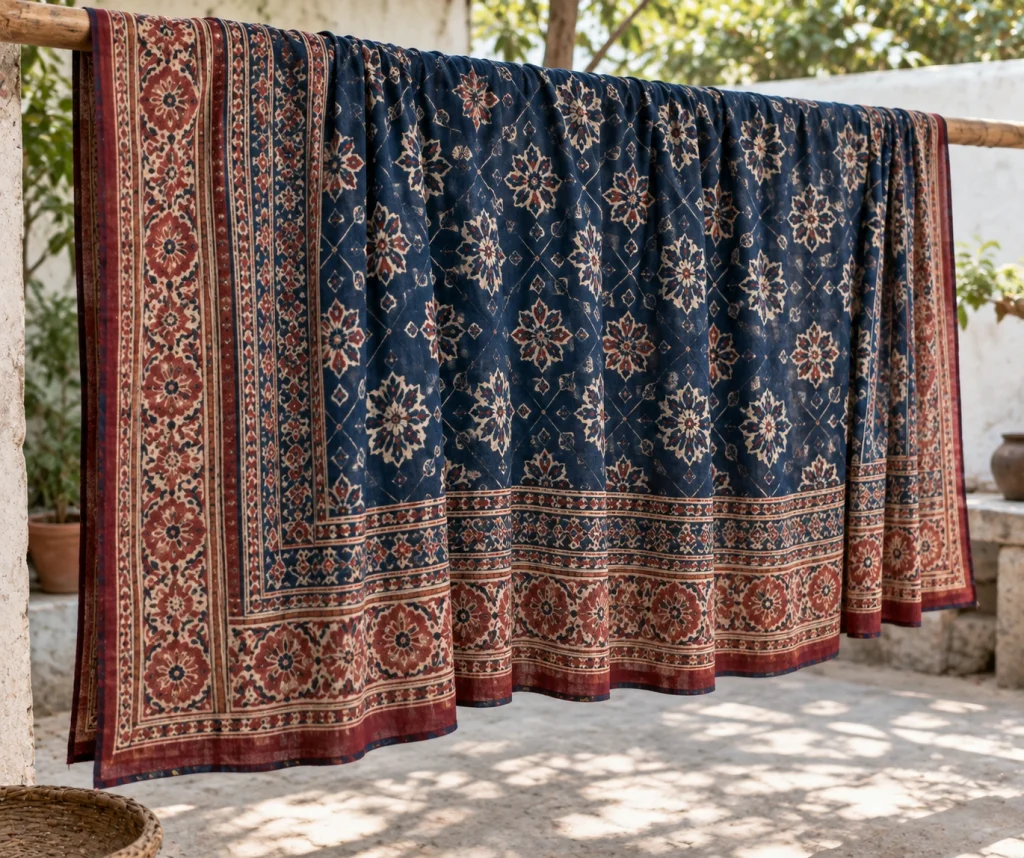
Dry in shade, never direct sunlight. Sun fades natural and chemical dyes alike, and unevenly.
Hang over a wide surface — a line doubled over a rod, or flat on a rack — rather than a thin single line, which leaves a crease across delicate fabric. Never tumble dry.
How to Iron a Saree
Most saree damage at home happens at the ironing board rather than in the wash. Three rules cover nearly all of it.
Iron from the reverse side. This keeps direct heat off the printed surface and prevents the shine marks that flatten a weave.
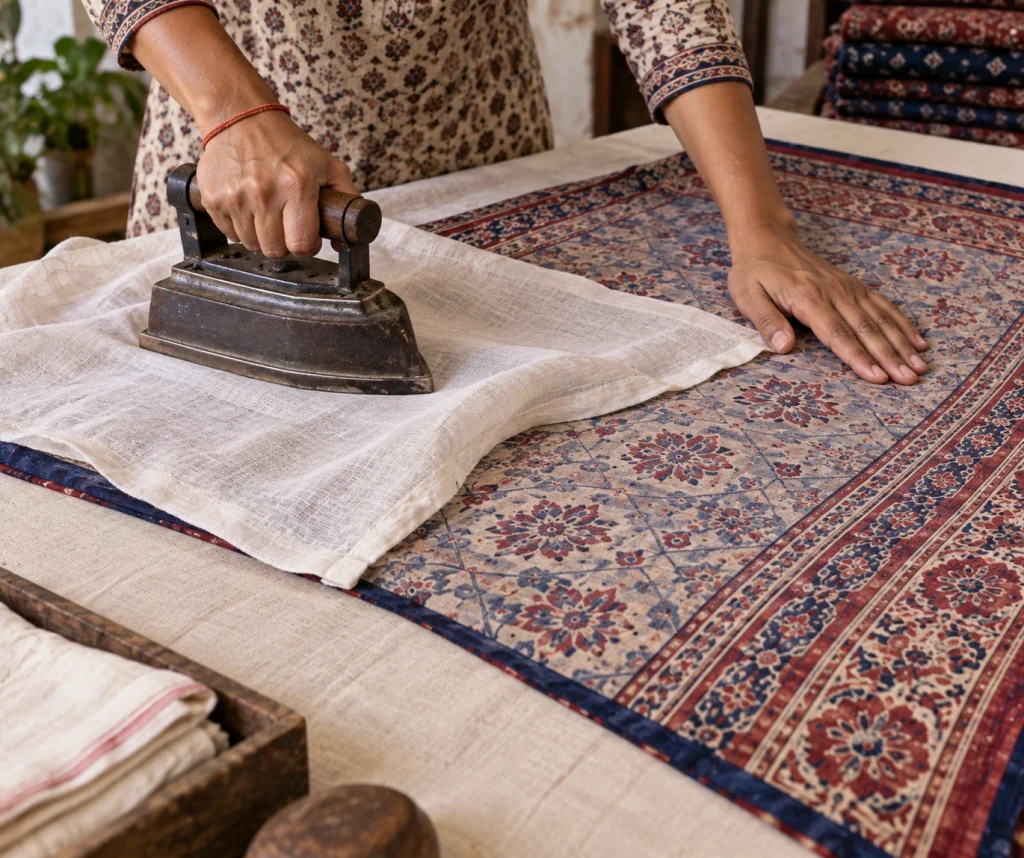
Use a pressing cloth. A thin, clean cotton cloth or muslin between iron and saree spreads heat evenly and protects the print. On anything with zari, this is not optional.
Test first. Press an inside corner or the fall for five seconds. If the fabric stiffens, changes texture or sticks, lower the heat.
Heat Settings by Fabric
| Fabric | Heat | Notes |
|---|---|---|
| Mul cotton | Medium | Iron slightly damp for the smoothest finish |
| Cambric cotton | Medium to high | Most tolerant of the fabrics we print |
| Linen cotton | Medium | Iron while slightly damp; linen creases readily |
| Kota Doria | Low | Open weave distorts under pressure — pressing cloth essential |
| Chanderi | Low | Steam is gentler than direct contact |
| Maheshwari silk | Low to medium | Iron zari borders from the reverse only |
| Modal silk | Low | Avoid steam; watermarks show easily |
| Chiffon | Lowest | Steam only where possible |
Technique
Lay the saree flat and smooth the folds by hand before the iron touches it. Work in short, light strokes rather than dragging the iron across the cloth — dragging pulls the weave out of line, particularly on handloom fabric.
Iron the border first, then the body, then the pallu. Never rest the iron in one place. On cotton and linen, a light mist from a spray bottle relaxes stubborn creases; on silk, skip the water, as droplets leave marks.
Avoid running the iron directly over zari. Metallic thread flattens permanently under heat and pressure, and once the raised texture is gone it does not come back.
How to Store Sarees
Storage decides how much ironing you will need later.
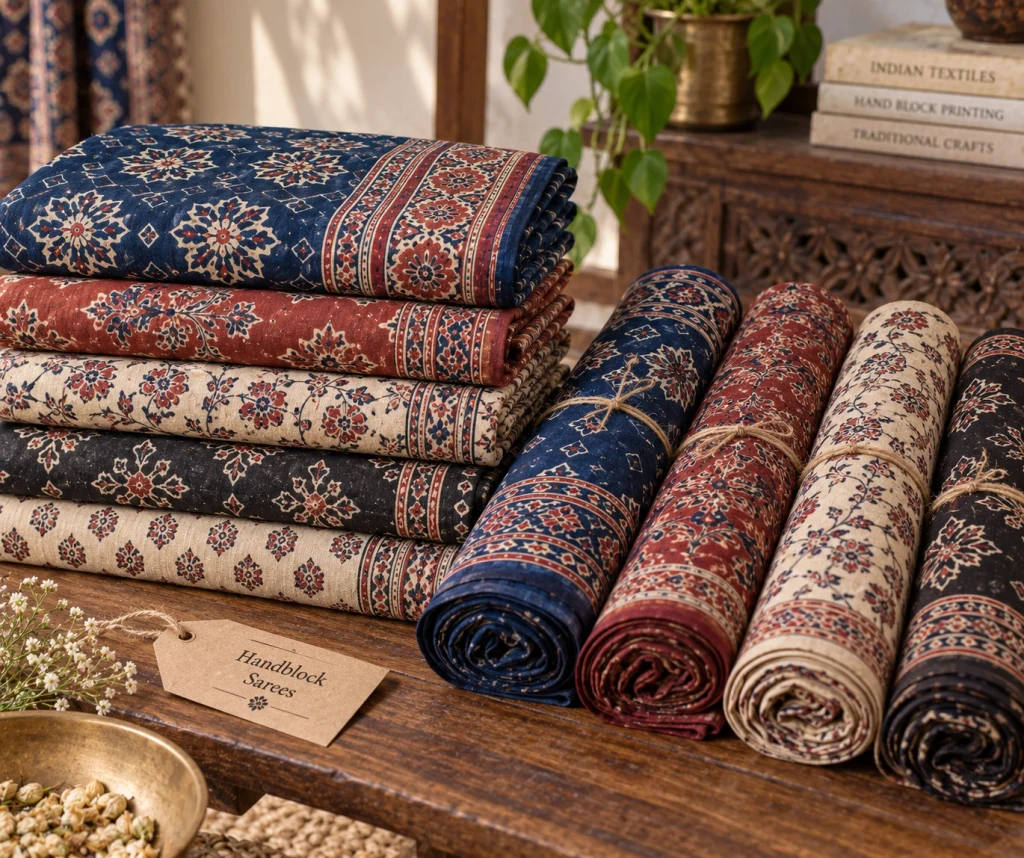
Roll rather than fold where you have the space. Rolling avoids sharp crease lines forming along the same points every time, which is what eventually cracks a print.
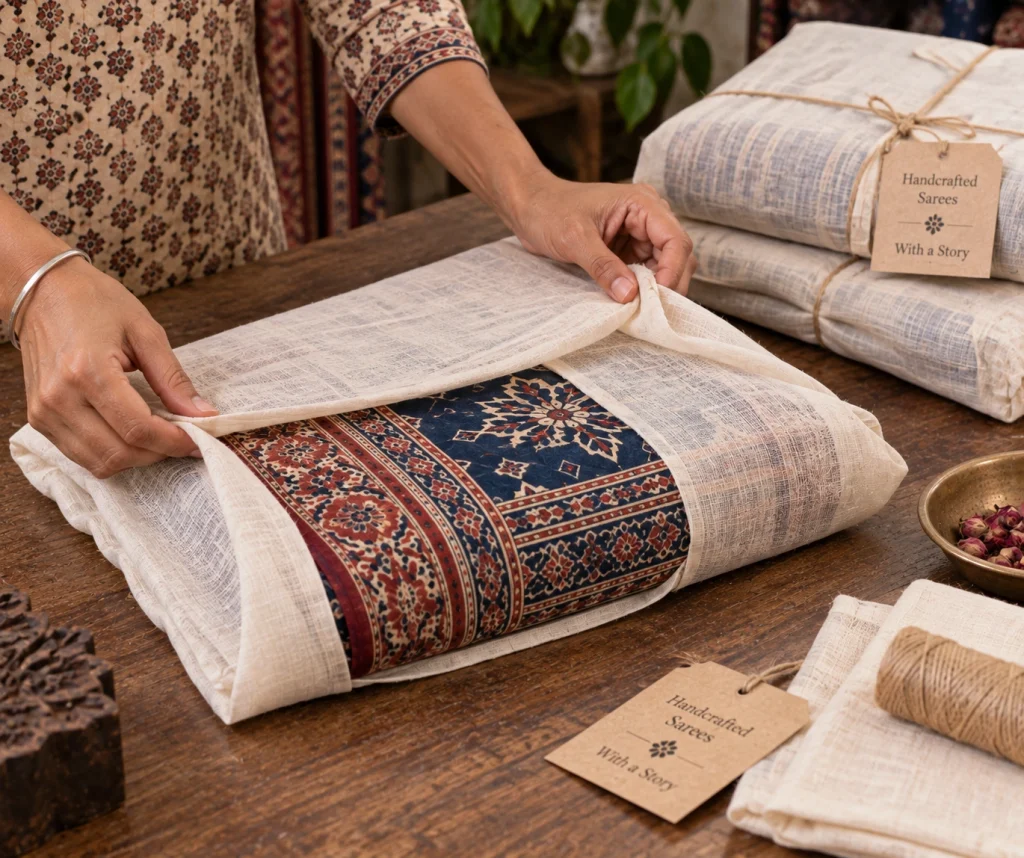
If you fold, refold along different lines every few months. A permanent crease weakens both the weave and the printed surface along that line.
Wrap in cotton or muslin, never plastic. Plastic traps moisture, which invites mildew and colour transfer. An old cotton dupatta works perfectly well.
Do not hang long-term. Hanging stretches the fabric under its own weight over months, especially silk.
Air them out. Unfold and refold every few months, particularly in humid weather. Store away from sunlight in a dry space.
How to Store Silk Sarees
Silk needs a little more. Keep each saree in its own muslin bag rather than stacked directly against other fabrics, since dye can transfer between pieces in storage. Avoid naphthalene balls in direct contact — wrap them separately or use dried neem leaves instead. Never store silk that is even slightly damp.
Stain Removal
Treat stains immediately. The longer one sits, the harder it is to lift without disturbing the print.
Blot, never rub. Rubbing spreads the stain and lifts the printed surface. For a fresh mark, cold water with a small amount of mild detergent worked in gently is usually enough.
Avoid bleach and strong stain removers entirely — they strip base dye and print together. For an old or stubborn stain, a cleaner experienced with hand-dyed textiles is safer than experimenting at home.
What Not to Do
| Don’t | Why |
|---|---|
| Machine wash | Agitation cracks the print and distorts delicate weaves |
| Use hot water | Accelerates dye fading, especially natural dyes |
| Wring or twist | Stresses the weave and lifts the print |
| Dry in direct sun | Fades colour unevenly |
| Use bleach | Strips dye and print together |
| Iron directly on the print at high heat | Flattens and smudges the printed surface |
| Iron over zari | Permanently flattens metallic thread |
| Store in plastic | Traps moisture, risks mildew and colour transfer |
| Hang for months | Stretches the fabric under its own weight |
Do You Need to Dry Clean?
For most hand block printed sarees, careful hand-washing at home is enough. That is the guidance we give our own customers.
Dry clean instead when the saree carries heavy zari, when it is silk you are unwilling to risk, or when a stain has set. Choose a cleaner who has handled hand-dyed textiles before — a standard dry cleaner may use solvents that lift natural dye.
Quick Reference by Fabric
| Fabric | Wash | Iron |
|---|---|---|
| Mul cotton | Hand wash cold | Medium, slightly damp |
| Kota Doria | Hand wash cold, no scrubbing | Low, pressing cloth |
| Linen cotton | Hand wash cold | Medium, slightly damp |
| Chanderi | Hand wash cold or dry clean | Low or steam |
| Maheshwari silk | Hand wash cold | Low to medium, reverse |
| Modal silk | Hand wash cold | Low, no steam |
Frequently Asked Questions
Will my hand block printed saree lose colour when I wash it?
Some colour release in the first one or two washes is normal for hand-dyed textiles, particularly with natural dyes and resist prints like Dabu. Wash separately until the water runs mostly clear.
Can I machine wash a hand block printed saree?
No. Machine agitation cracks the print and stresses the weave in a way hand washing avoids.
What temperature should I iron a saree at?
Cotton and linen take medium to high heat. Kota Doria, Chanderi, modal silk and chiffon need low. Maheshwari silk sits between the two. Always iron from the reverse with a pressing cloth, and test an inside corner first.
Should I iron a saree damp or dry?
Cotton and linen iron best slightly damp — mist lightly with a spray bottle. Silk and silk blends should be dry, since water droplets leave visible marks.
How do I store a saree so it does not crease?
Roll rather than fold where you have space. If you fold, change the fold lines every few months and wrap in cotton or muslin rather than plastic.
What detergent should I use?
A mild, pH-neutral detergent. For silk, a detergent made for delicates or a small amount of mild shampoo. Avoid harsh detergents, bleach and strong stain removers.
How do I stop the print from fading?
Wash in cold water, dry in shade, iron on the reverse at a heat suited to the fabric, and avoid harsh detergents.
Can I iron over a zari border?
Avoid it. Iron the area from the reverse with a pressing cloth. Direct heat and pressure flatten metallic thread permanently.
More Guides
To understand why hand block printed cloth behaves the way it does, read what Bagru printing is and how to identify an authentic hand block print, or browse our hand block printed sarees.