A Chanderi saree gives you sheen without weight. This collection is Chanderi silk cotton — a handloom blend woven in Chanderi, Madhya Pradesh — hand block
printed by our artisans in Bagru, Rajasthan. Every Chanderi silk saree here comes with a matching blouse piece, and no two are quite identical.
What Makes a Chanderi Saree Different
Chanderi is woven on pit looms in Chanderi, Madhya Pradesh. Its defining quality is transparency with lustre: the yarn is not degummed during weaving, which leaves a natural shine and gives the cloth its fine, glass-like finish.
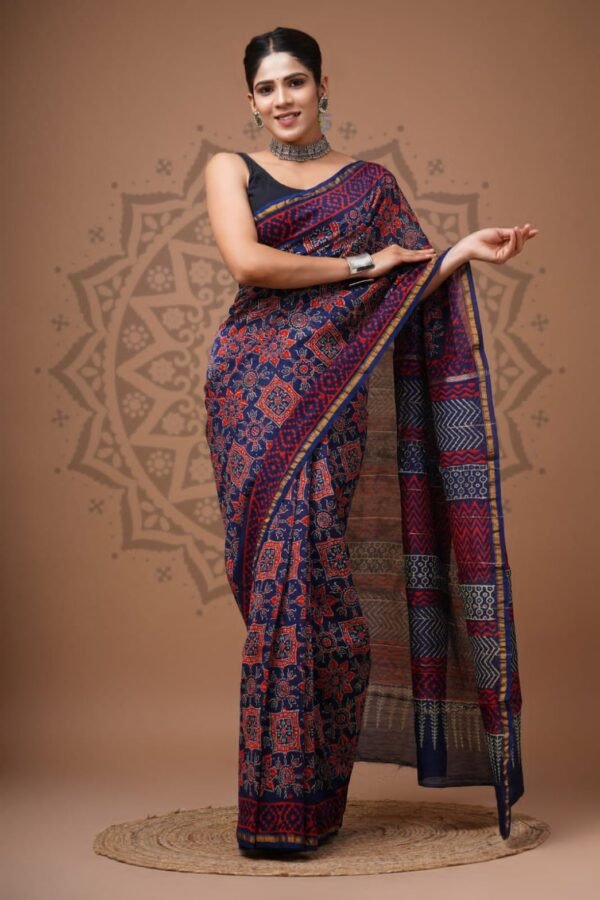
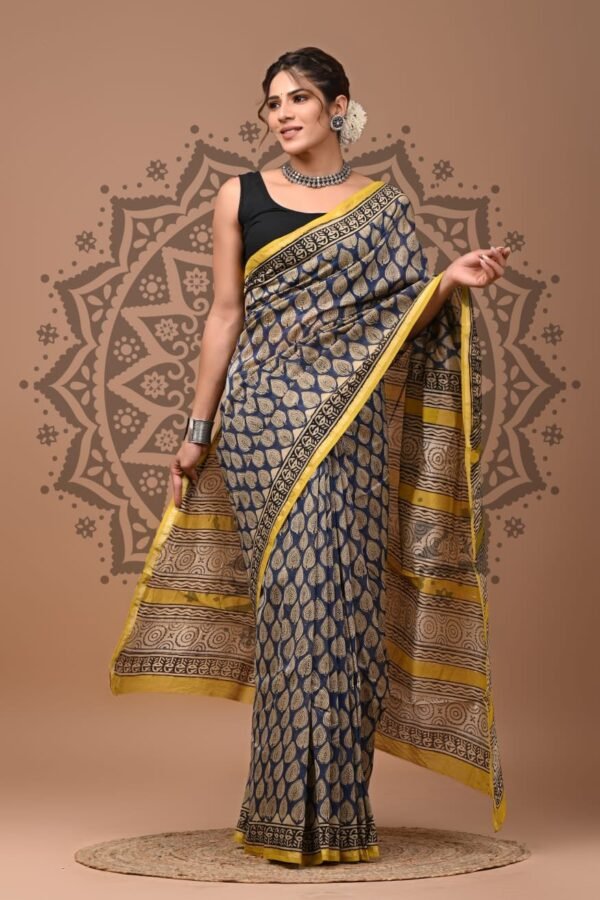
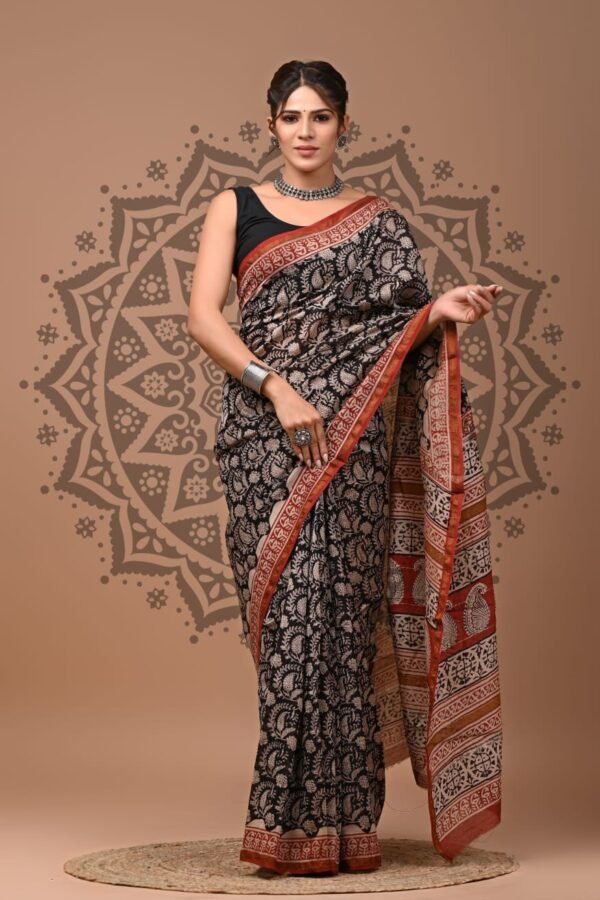
Almost all Chanderi sold today is a blend rather than pure silk. Ours is a Chanderi cotton silk saree — silk in one direction, fine cotton in the other. That is what keeps a Chanderi cotton saree comfortable through a working day while holding the sheen plain cotton cannot give you. If you specifically want 100% silk, this is not that, and we would rather say so than let you find out on arrival.
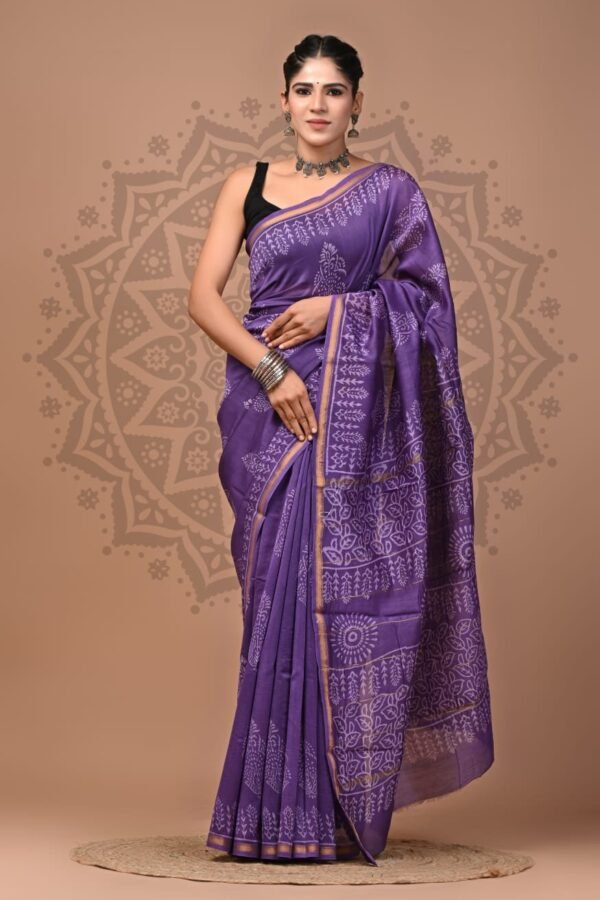
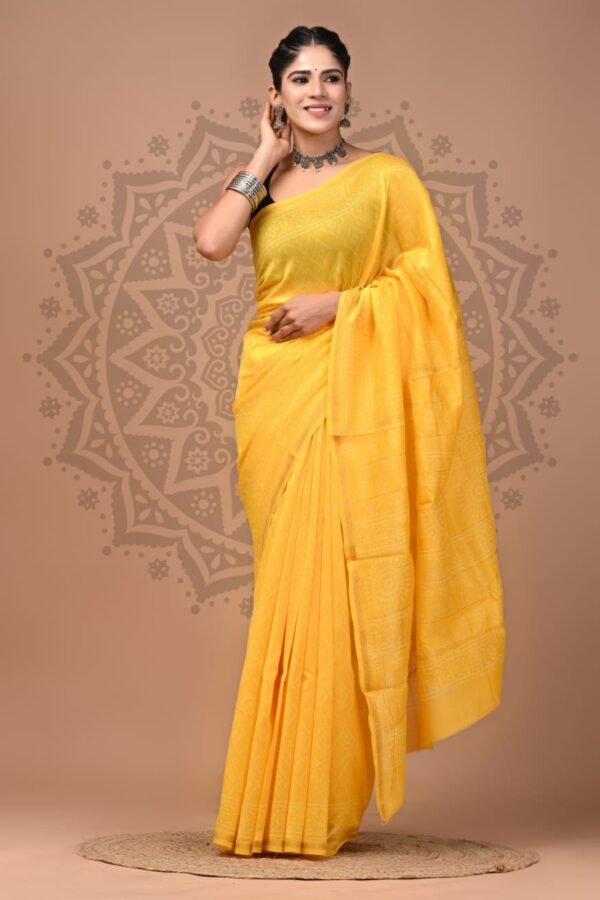
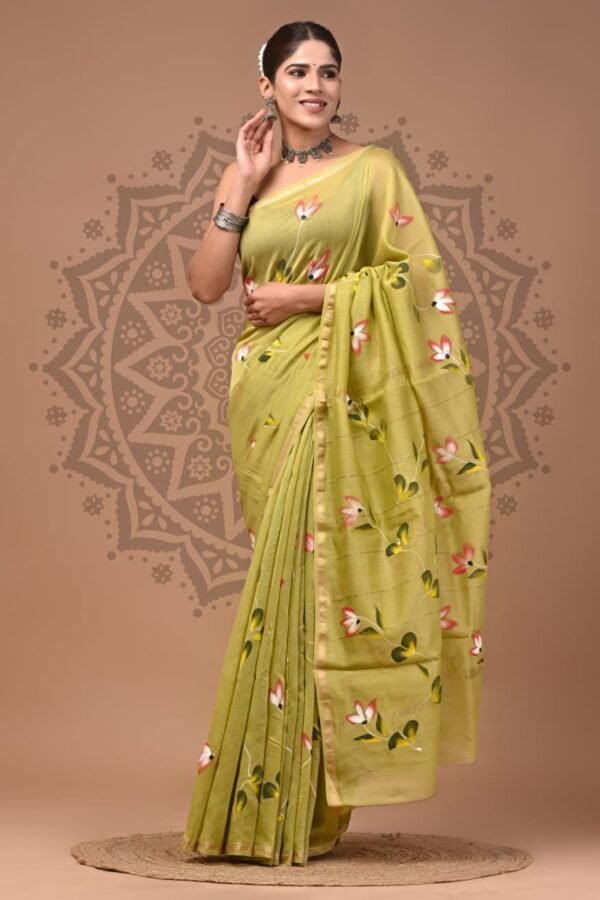
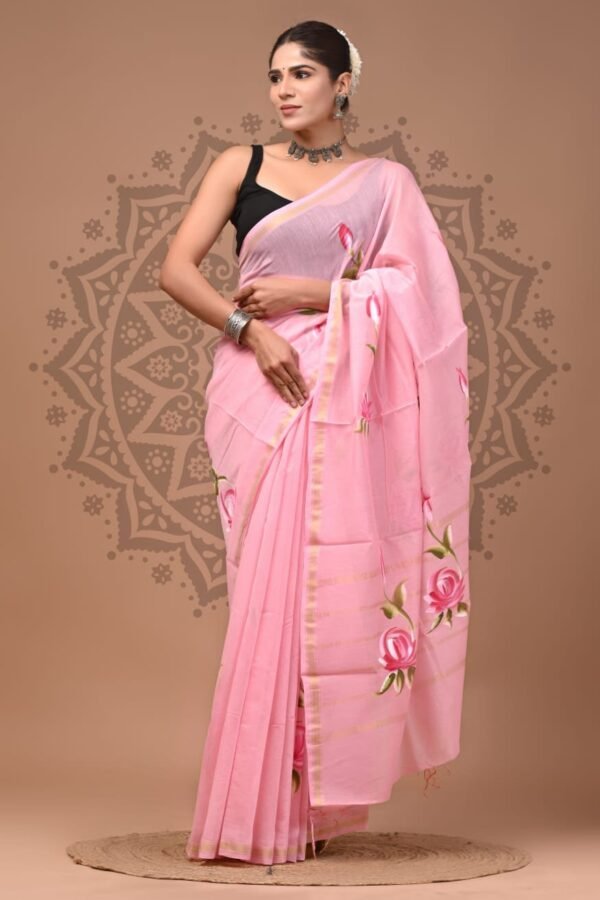
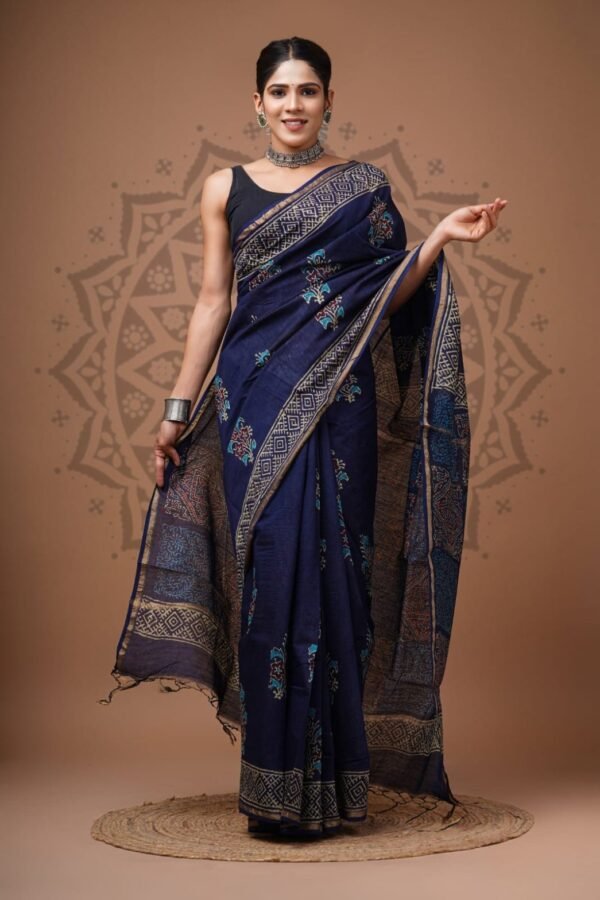
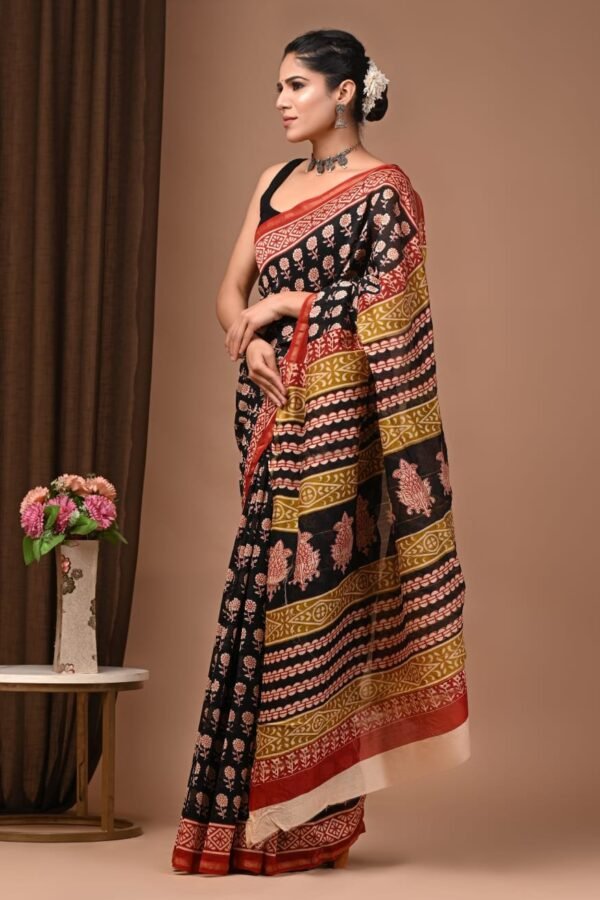
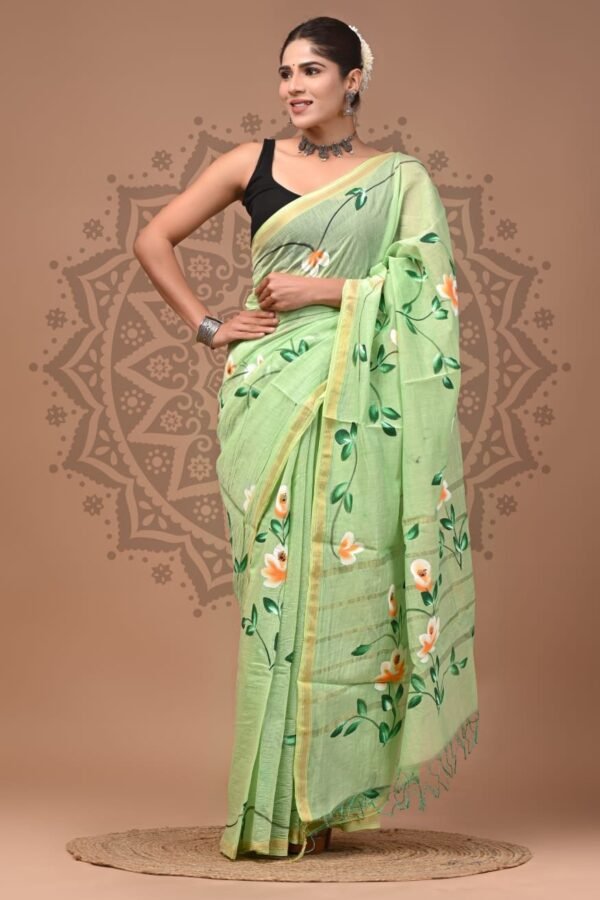
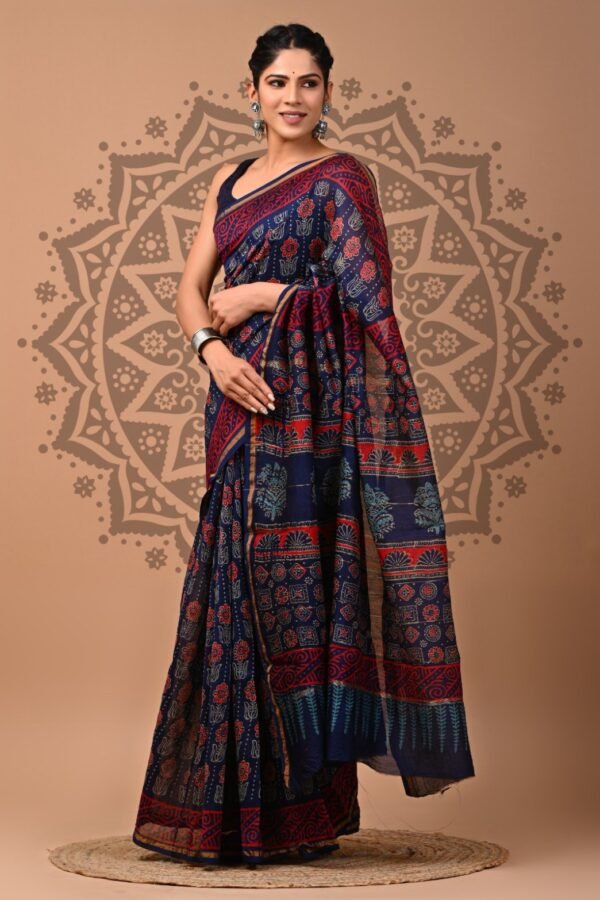
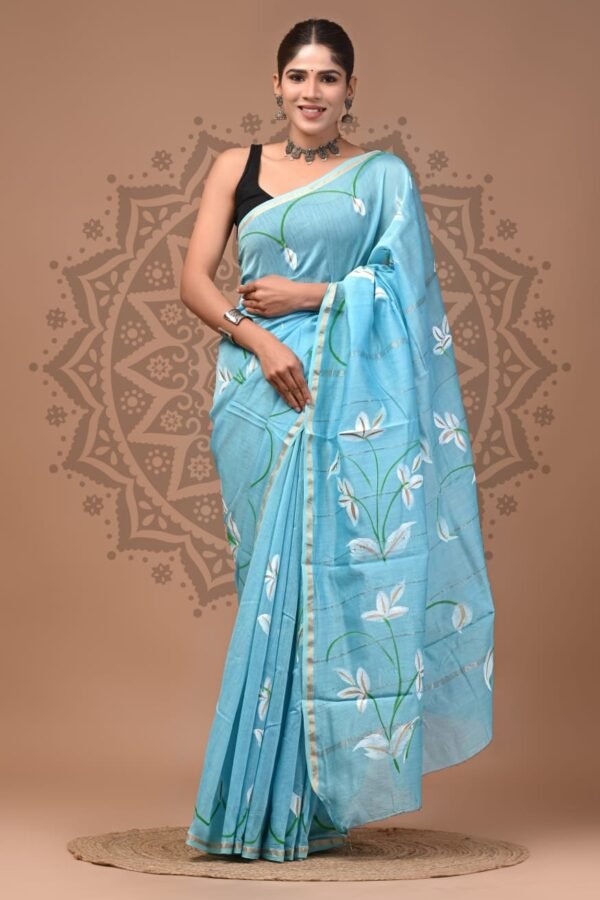
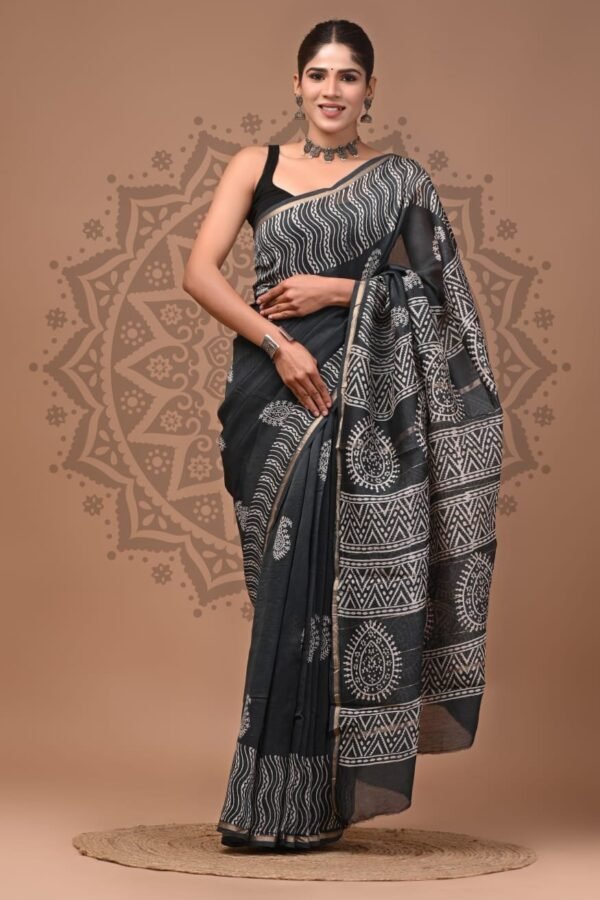
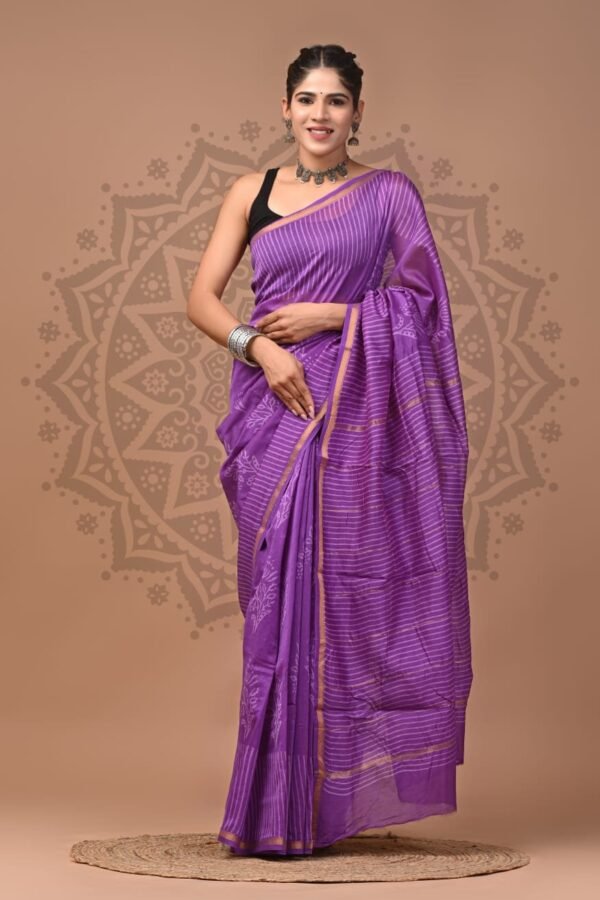
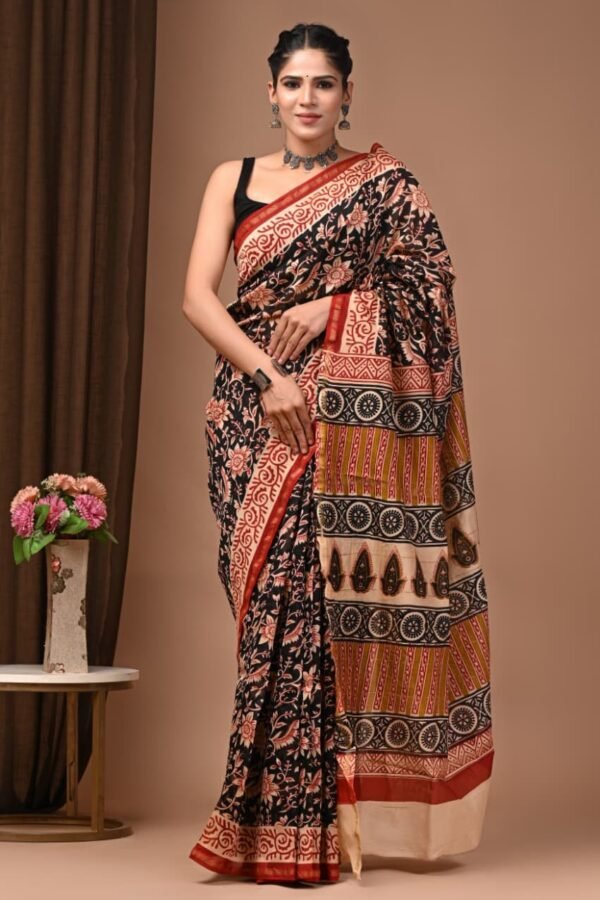
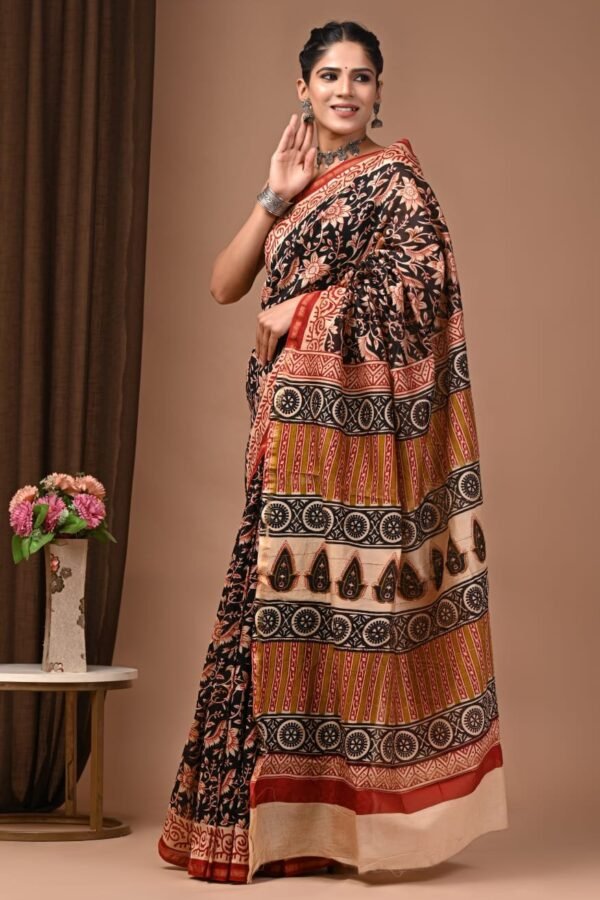
What You Get
- Saree — approximately 5.5 metres, width 44''
- Blouse piece — matching, included with every saree, 1 metre Blouse
- Total — approximately 6.5 metres including blouse piece
- Fabric — Chanderi silk cotton Powerloom
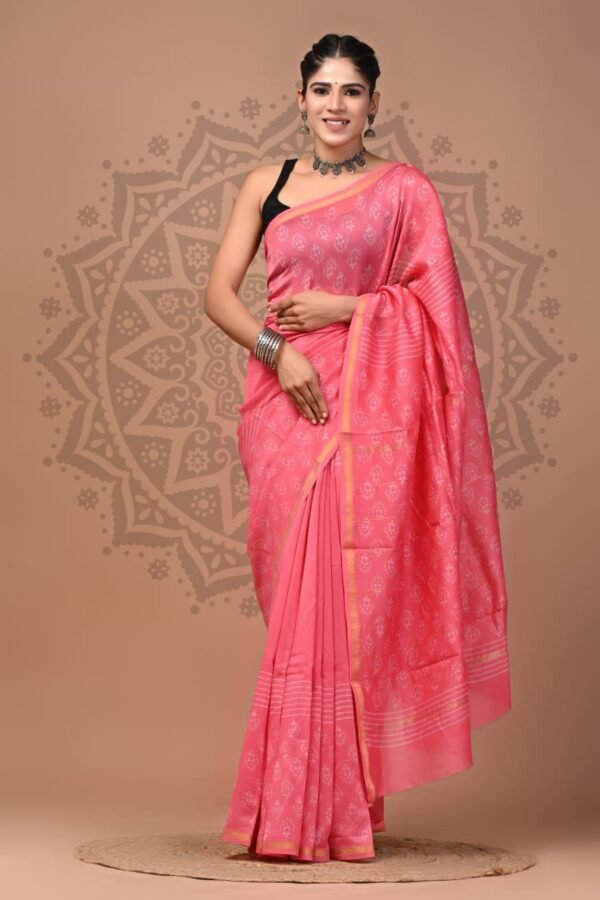
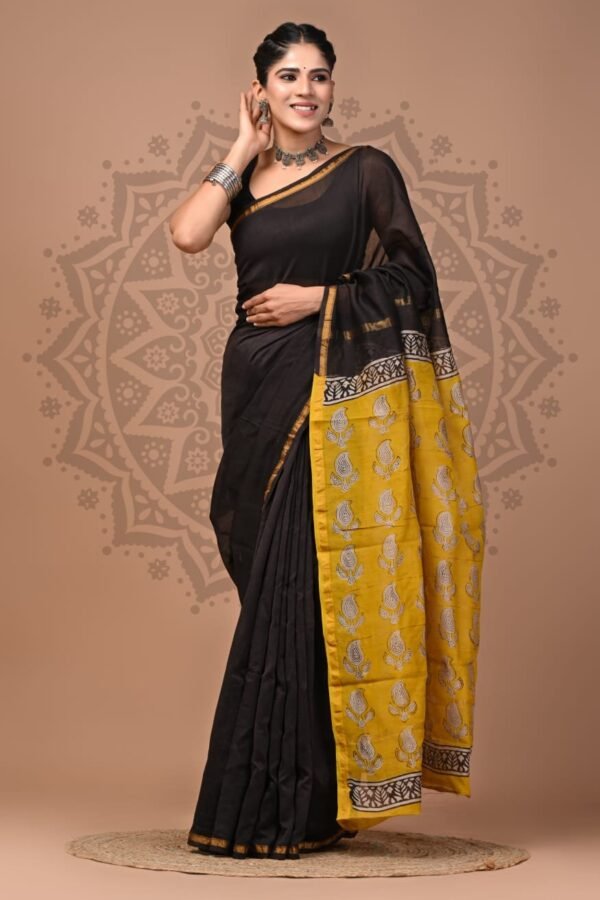
- Zari border — yes all sarees have golden Zari Border
The Printing Techniques in This Collection
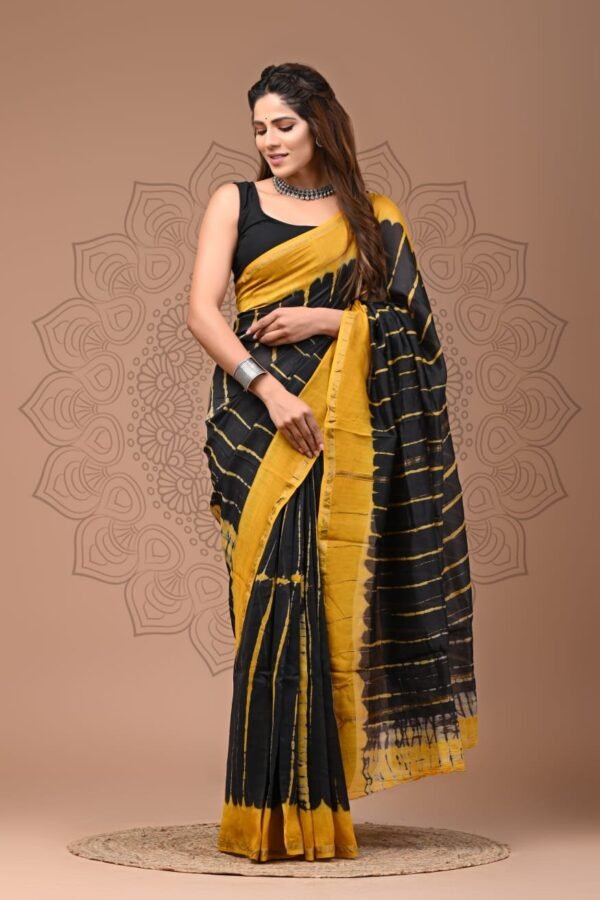
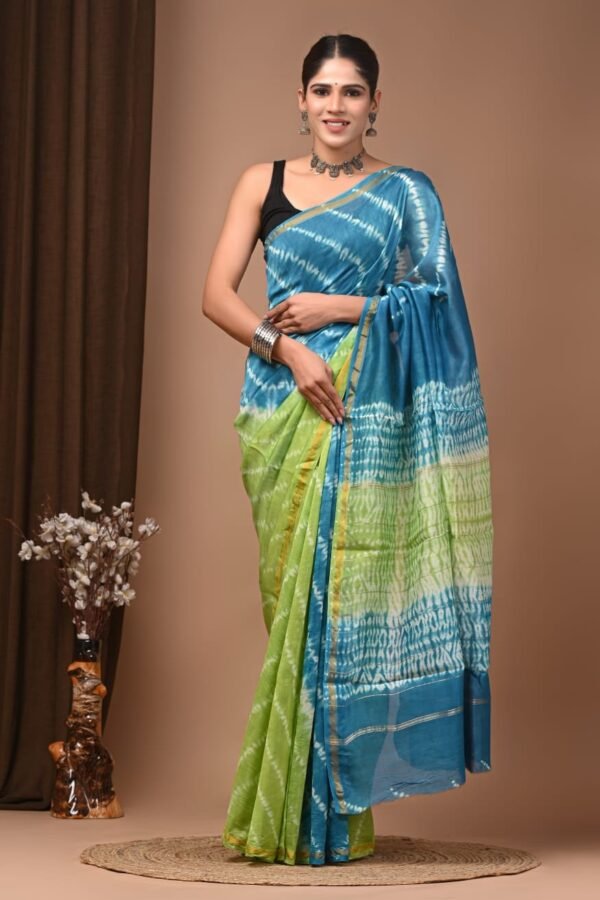
This is not one print repeated in different colours. Across the collection you will find Bagru block printing, Dabu mud-resist work, Ajrakh block printing, Shibori-style tie-dye, Batik, Sanganeri rapid print, indigo dyeing, discharge
printing, and pomegranate (anar) dye, among other specialised styles.
So a Dabu print Chanderi saree, an indigo Chanderi saree and a Shibori Chanderi saree all sit in the same collection on the same cloth — which makes this a good place to compare traditions rather than just colours. The technique used on each piece is listed on its product page.
Natural Dyes and Azo-Free Dyes
Some sarees in this collection are made with natural dyes; others use azo-free chemical dyes.
We are specific about this because the distinction is often blurred. Natural dyeing — indigo, pomegranate rind, madder — gives softer, more variable colour and is slower to produce. Azo-free dyes are synthetic but free of the aromatic amines restricted in textile safety standards, and they hold brighter, more consistent shades. Both are legitimate. Neither is a substitute for knowing
which you are buying.
Printed by Our Own Artisans in Bagru
Every printed Chanderi saree here is worked by hand in our own unit in Bagru, around thirty kilometres from Jaipur. The printing families there are known as
Chippas, and the craftsmen who carve the wooden blocks are called Kharaudi.
Chanderi is an unforgiving cloth to print — fine, smooth, and quick to show a careless impression. That skill is also why you will find small irregularities:
a faint join where two impressions meet, one motif slightly deeper than its neighbour, a subtle shift in colour along a length. These are the marks of the hand, not defects. A screen or digital print would be flawlessly uniform, and it
would look it.
Colours and Motifs
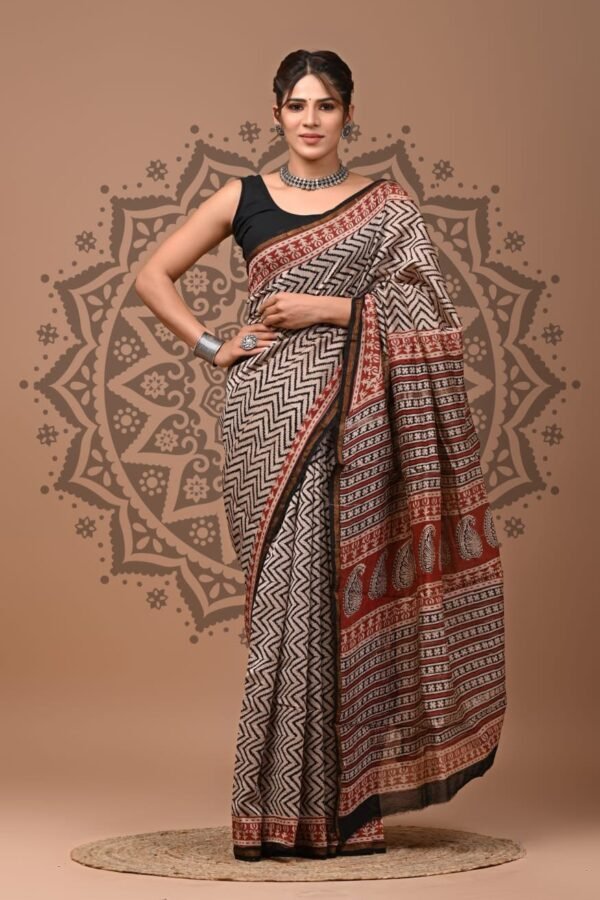
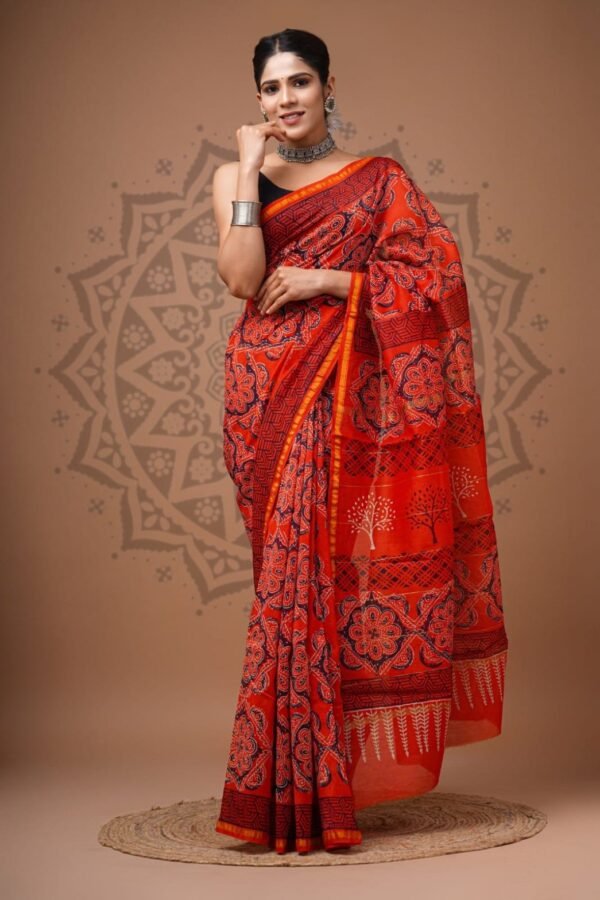
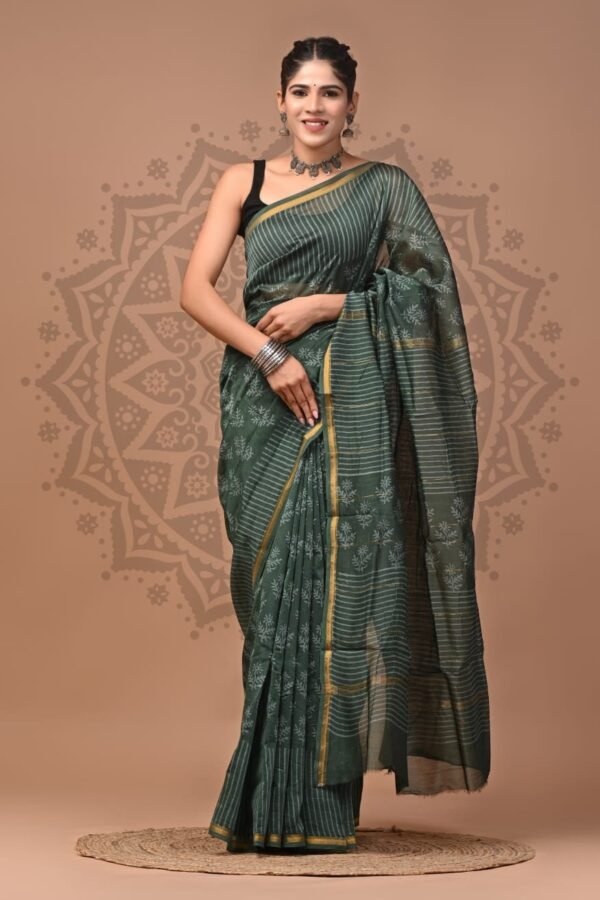
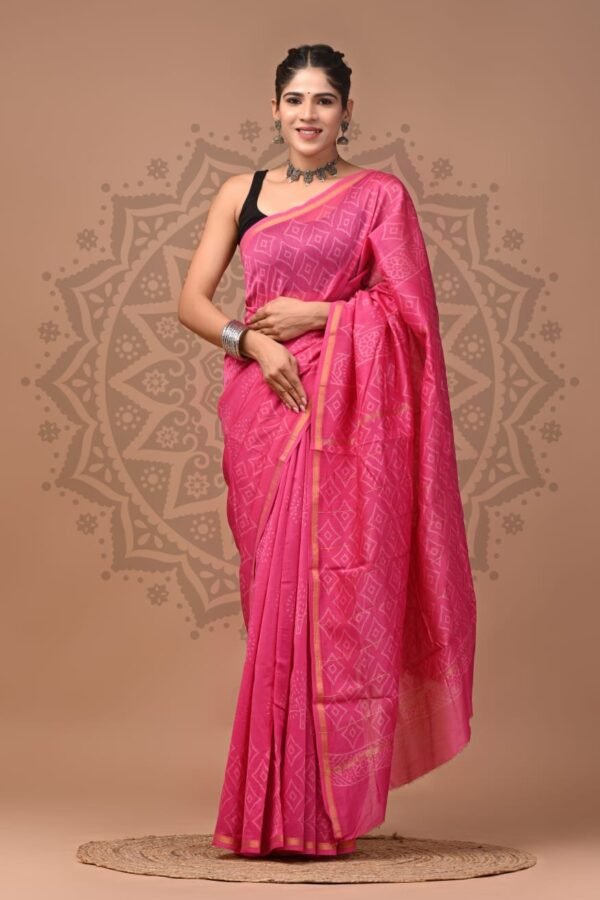
Indigo, blue, black, red, maroon, pink, green, mustard, beige, off-white and other earthy tones. Motifs shift with the technique — floral and botanical patterns, small buti work, geometric repeats, printed borders and pallus, and
indigo Dabu where it applies.
How to Style a Chanderi Silk Saree
The silk-cotton blend carries a Chanderi handloom saree comfortably through everyday ethnic wear, office days and casual outings. Richer colours, zari borders and denser prints move the same saree into festive dressing, family functions and daytime celebrations.
A plain or lightly contrasting blouse usually lets the block print stand on its own. Because Chanderi is slightly sheer, most customers pair it with a standard petticoat in a matching tone.
Caring for Chanderi
Hand wash gently in cold water, or dry clean. Chanderi's sheer weave needs a soft touch — no scrubbing, no wringing. Dry flat in shade. Iron on low heat on
the reverse, or steam, to protect the texture. Some colour release in early washes is normal on hand block printed cloth.
Buying a Chanderi Saree Online
Chanderi silk saree price varies widely across sellers, and fabric composition is usually the reason. "Pure Chanderi saree" can mean pure silk, silk-cotton, or a cotton blend depending on who is selling it — so compare like
for like before comparing price. Ours is silk cotton, stated plainly.
Screens differ and lighting shifts colour, so expect small differences between the photograph and the cloth. Message us on WhatsApp for additional
photographs before ordering. Free shipping applies over ₹1999.
Wholesale and Reselling
We supply Chanderi sarees at wholesale rates to boutiques and resellers across India, printed in our own unit in Bagru. Dropshipping is available. Message us on WhatsApp for rates and quantities.
Frequently Asked Questions
Are these Chanderi sarees pure silk or a silk-cotton blend?
Silk-cotton blend, not 100% silk. The blend gives the saree its lightweight feel and soft drape while keeping it comfortable for all-day wear.
How long is the saree, and is the blouse piece included?
Approximately 6.5 metres in total, including a matching blouse piece which is included with every saree in this collection.
What hand block printing techniques are used?
Bagru, Dabu, Ajrakh, Shibori, Batik, Sanganeri, indigo dyeing, discharge printing and pomegranate (anar) dye, among others. The technique varies by saree and is listed on each product page.
Are these sarees made with natural dyes or azo-free dyes?
Both. Some pieces use natural dyes, others use azo-free chemical dyes. The dye used is stated on each individual product page.
Does every saree have a zari border?
Yes Zari borders appear on All pieces, the whole range.
How do I wash a Chanderi silk saree?
Hand wash gently in cold water or dry clean. Avoid wringing, dry flat in shade, and iron on low heat on the reverse side.
Is a Chanderi saree suitable for daily wear?
Yes. The cotton in the blend makes it breathable enough for office and everyday wear.
Is Chanderi see-through?
Chanderi is fine and slightly sheer by nature — that translucency is part of what defines the fabric. Most customers wear it with a standard petticoat.
Explore More
For a heavier silk-cotton handloom with a wide zari border on every piece,
see our Maheshwari silk sarees. For pure cotton, the mulmul cotton sarees are lighter and less formal, and the
Kota Doria cotton
sarees are the most open weave we make. The same fabric is available as a suit in our Chanderi silk suits. Browse all hand block printed Sarees, or read how Bagru
hand block printing actually works.