Pure cotton suits with cotton dupatta are the ones you reach for on an ordinary Tuesday. Lighter than our silks, easier to wash, and comfortable through a full working day in Indian heat. Every set here is unstitched, so the fit is decided by your tailor rather than a size chart.
What's in a Cotton Suit Set
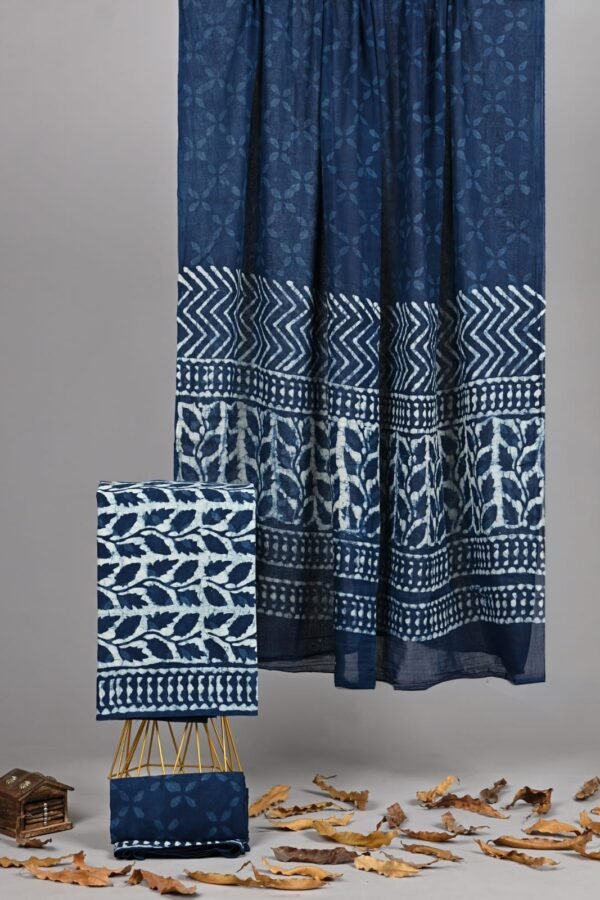
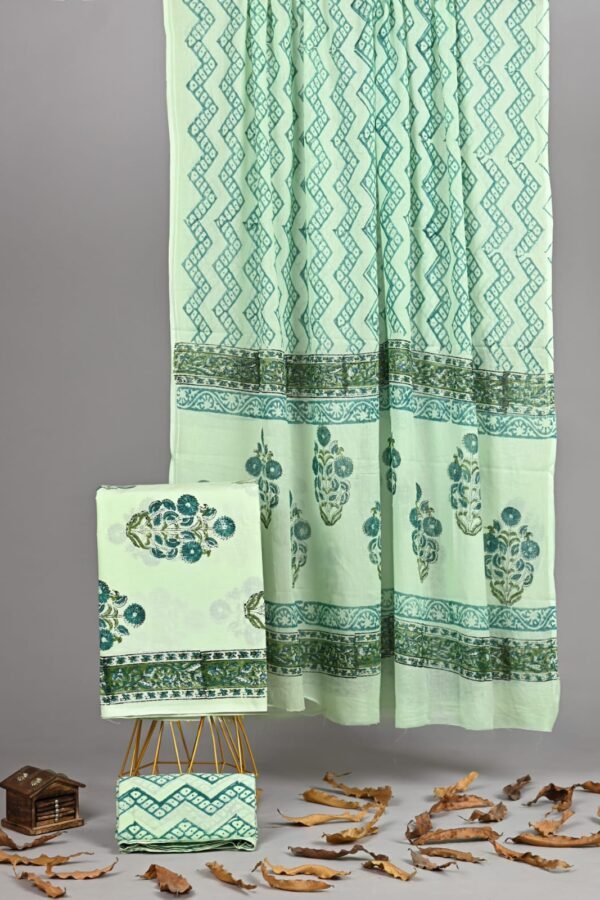
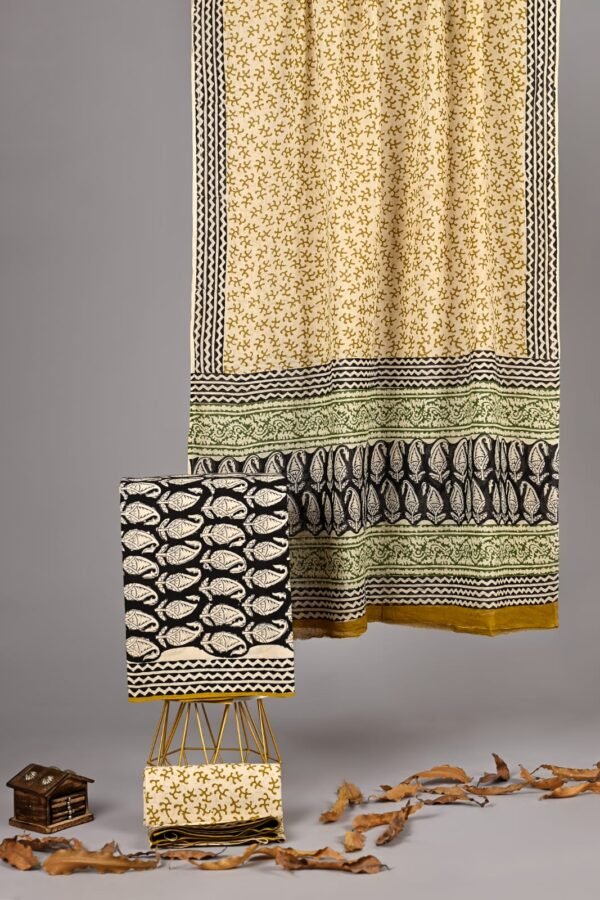
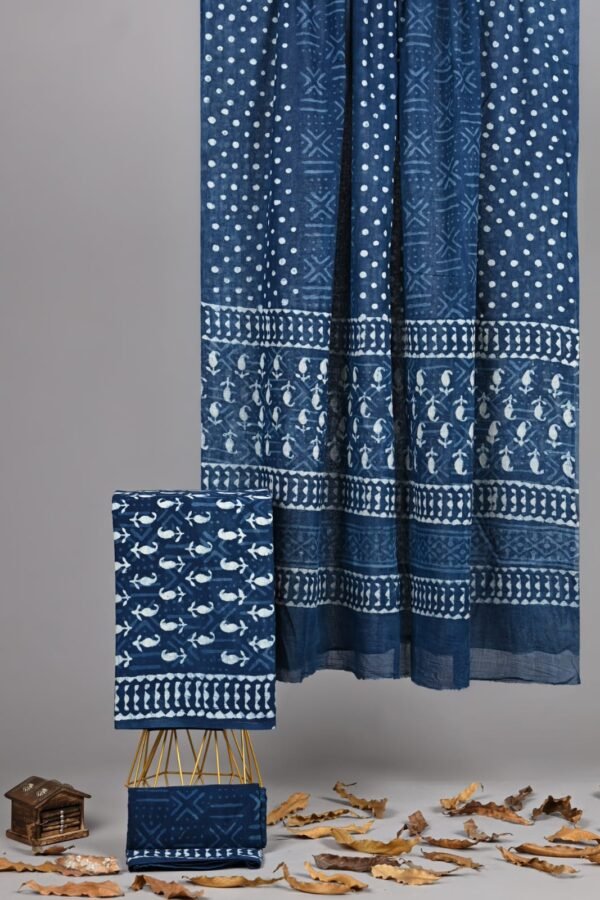
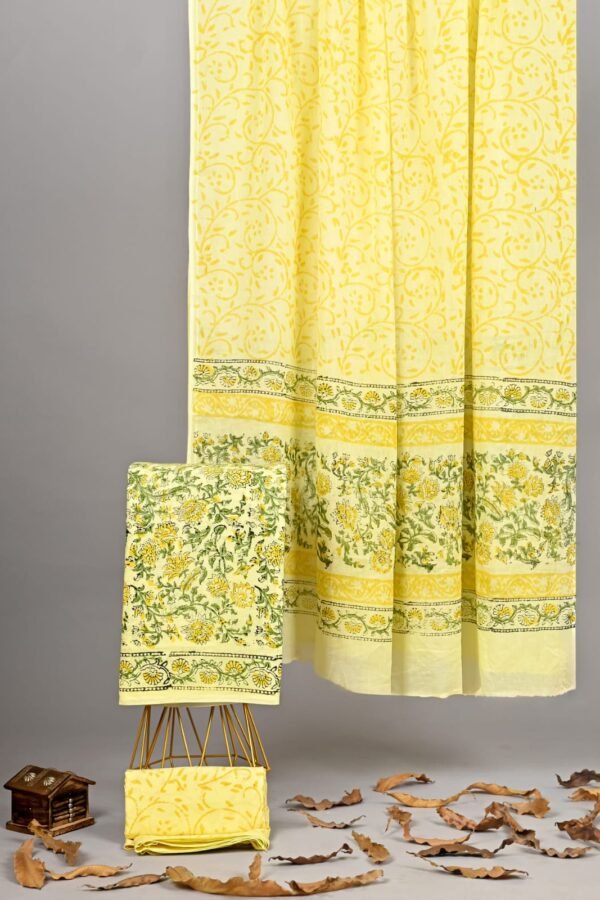
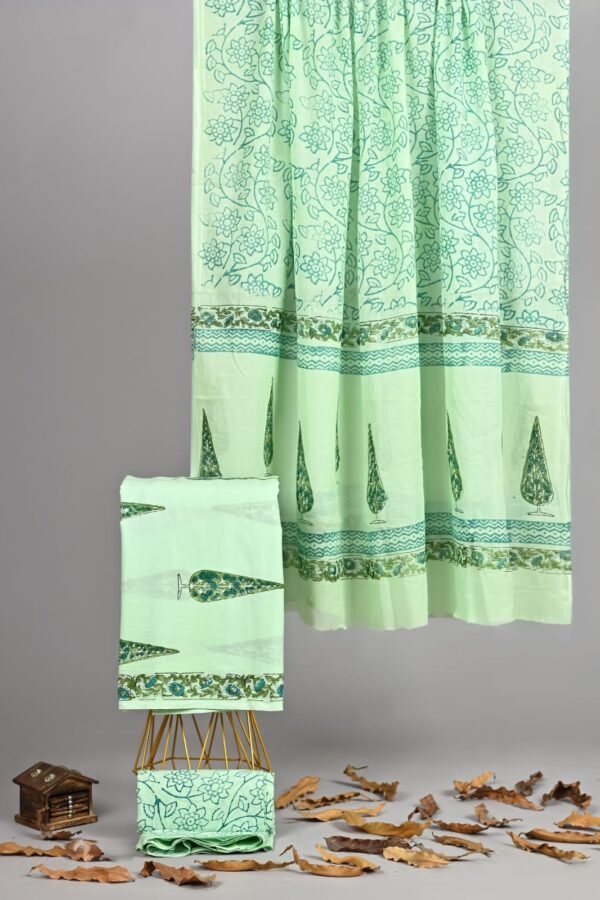
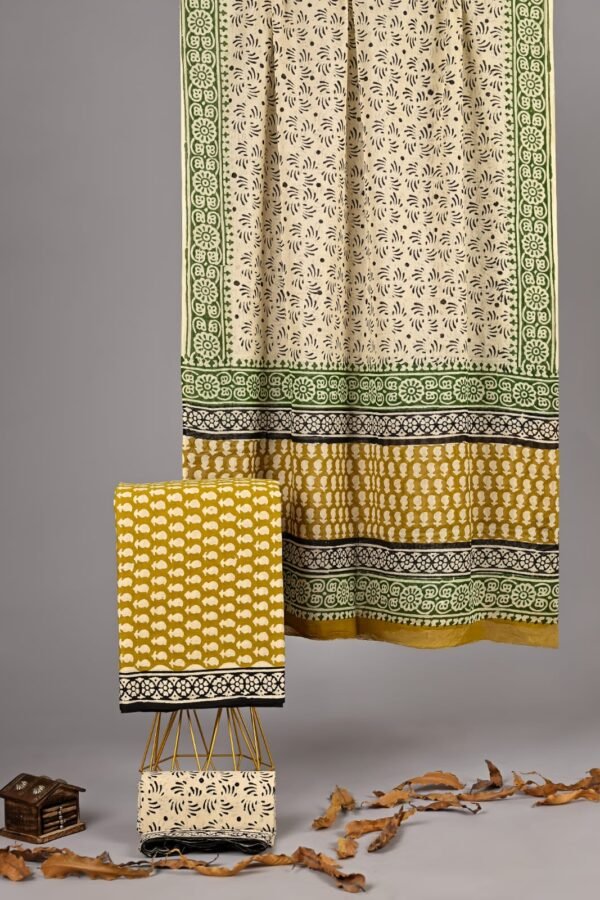
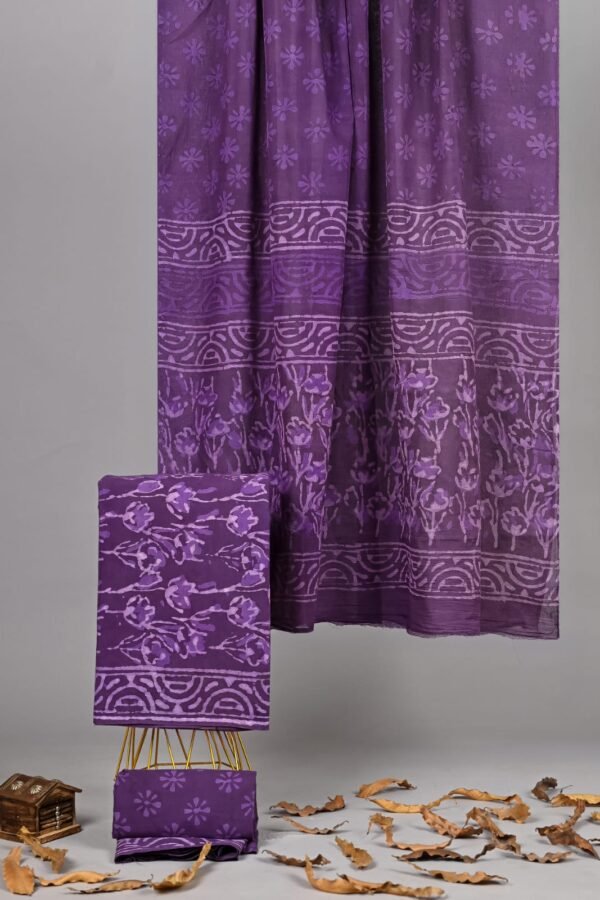
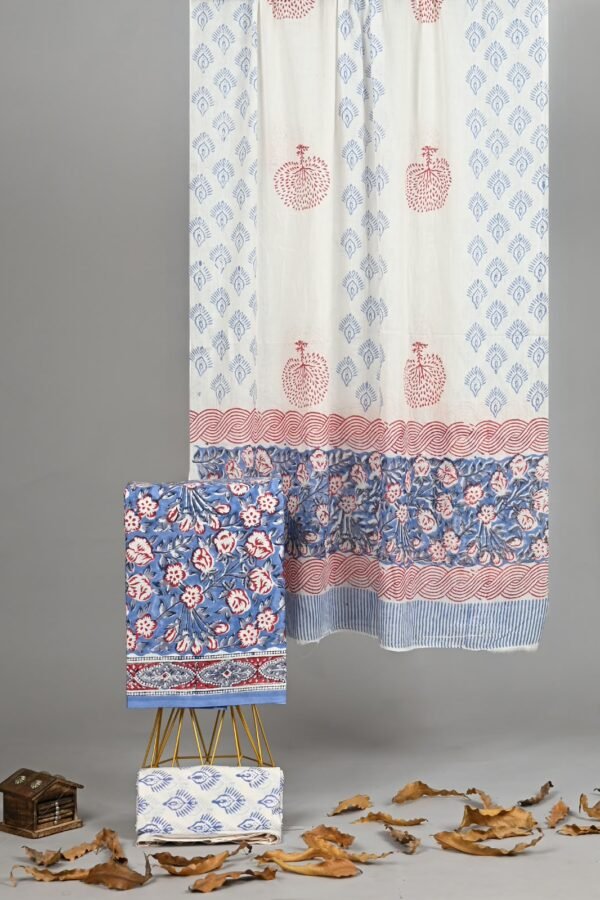
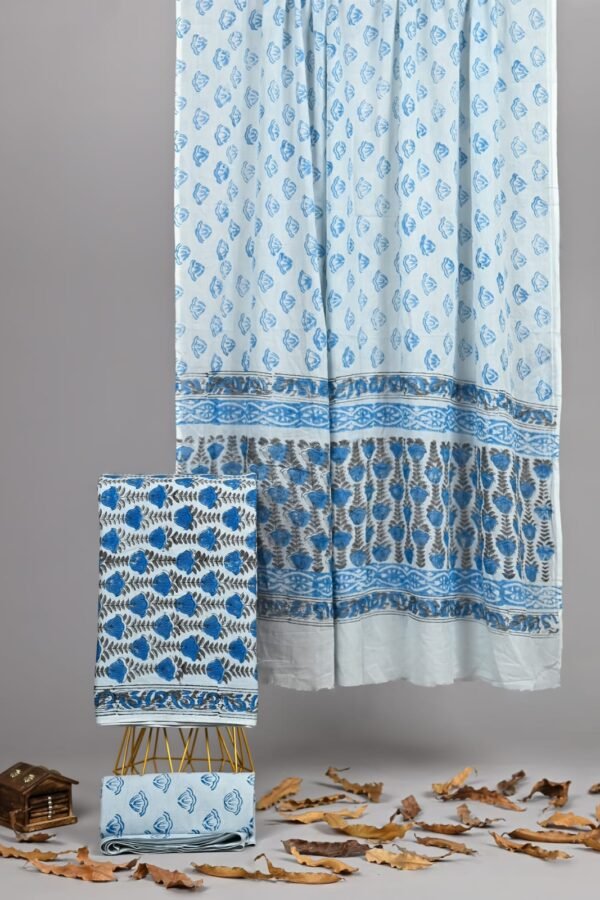
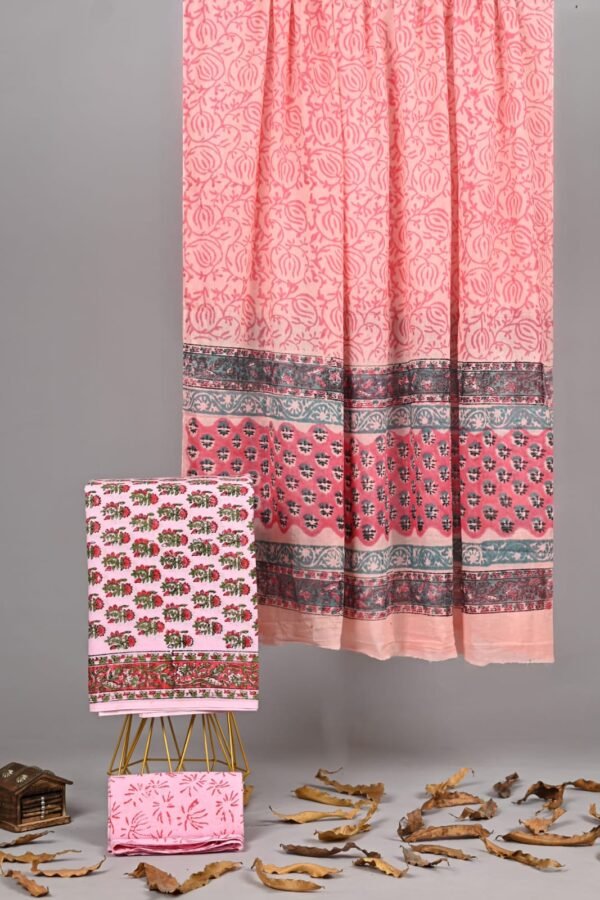
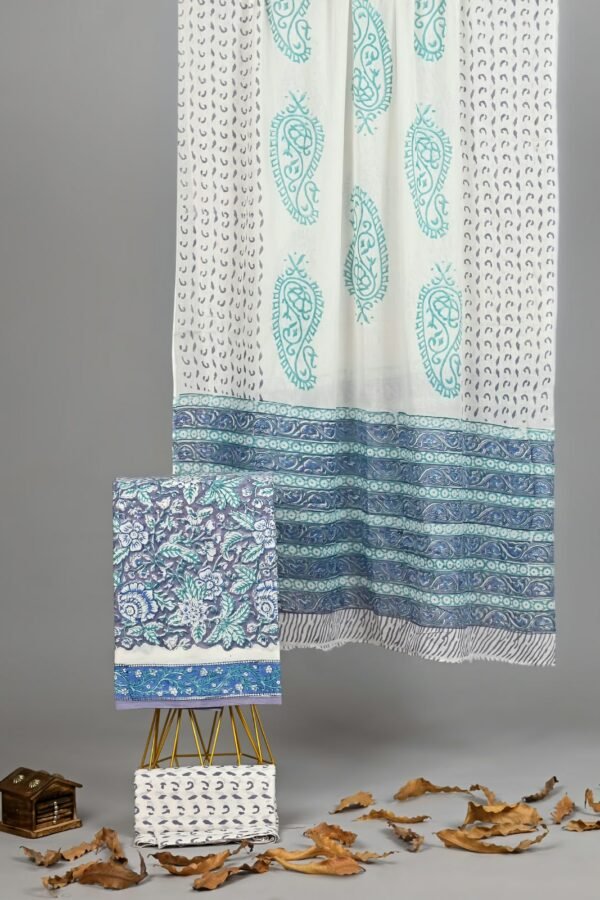
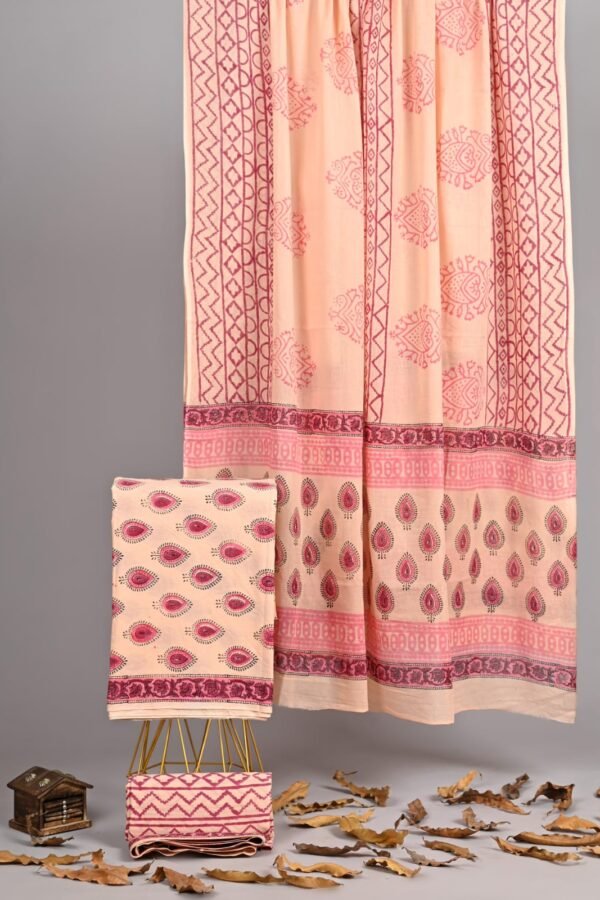
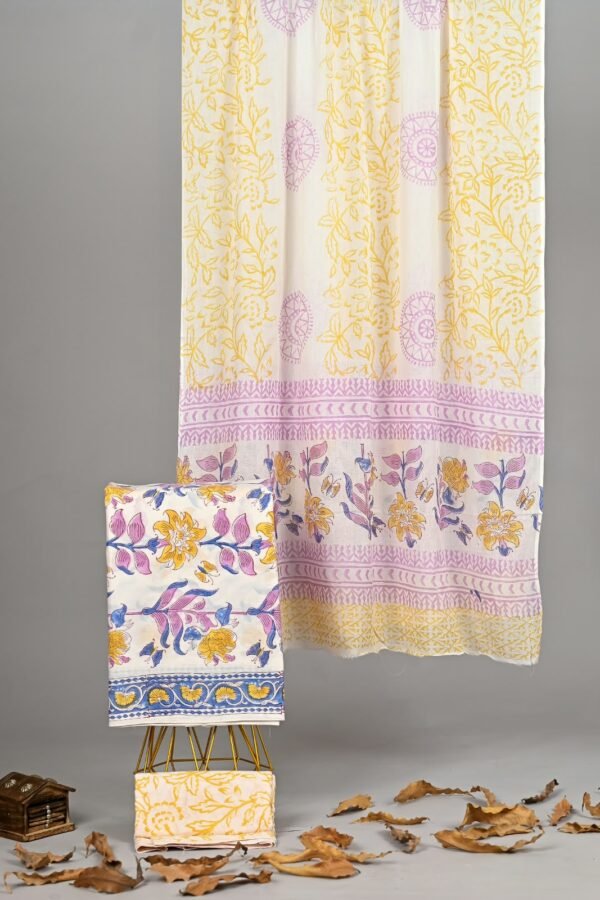
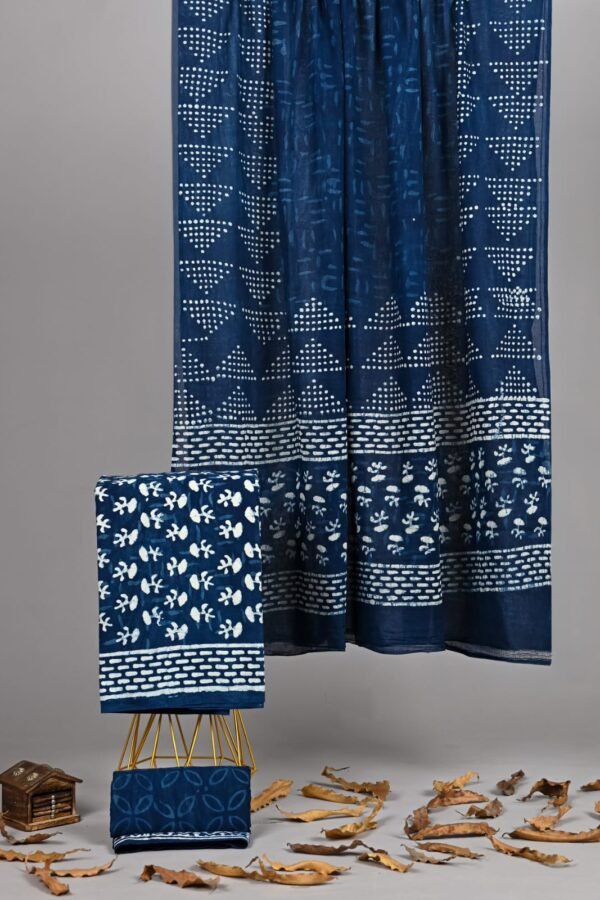
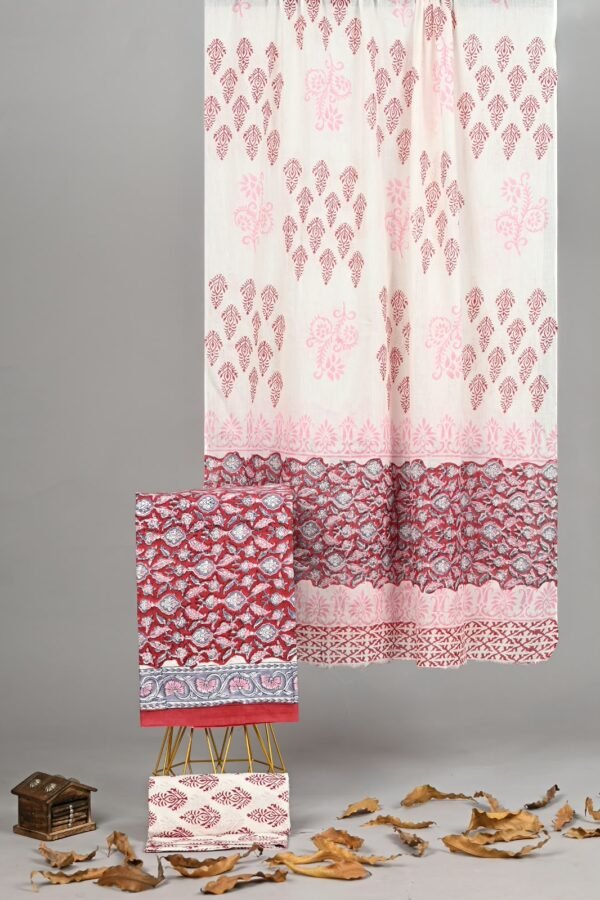
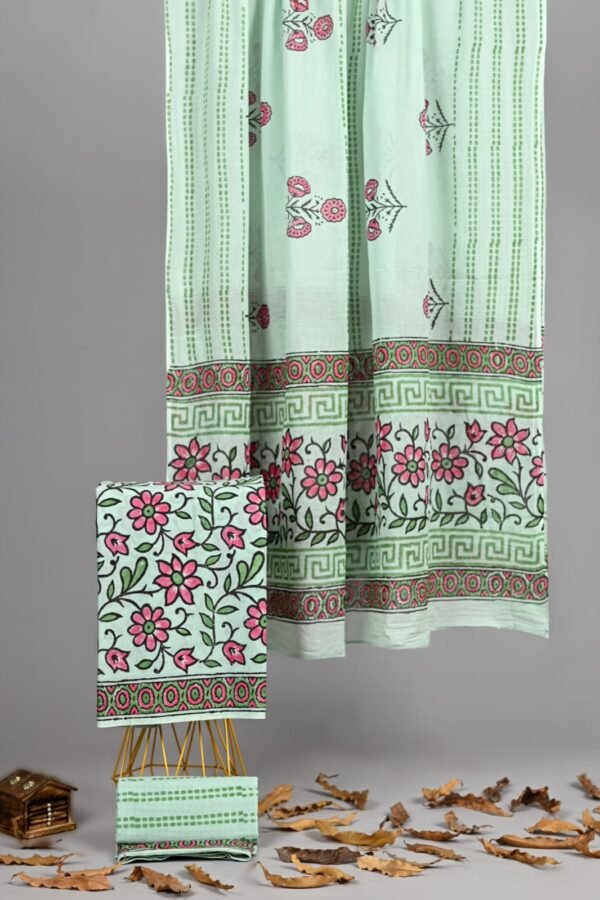
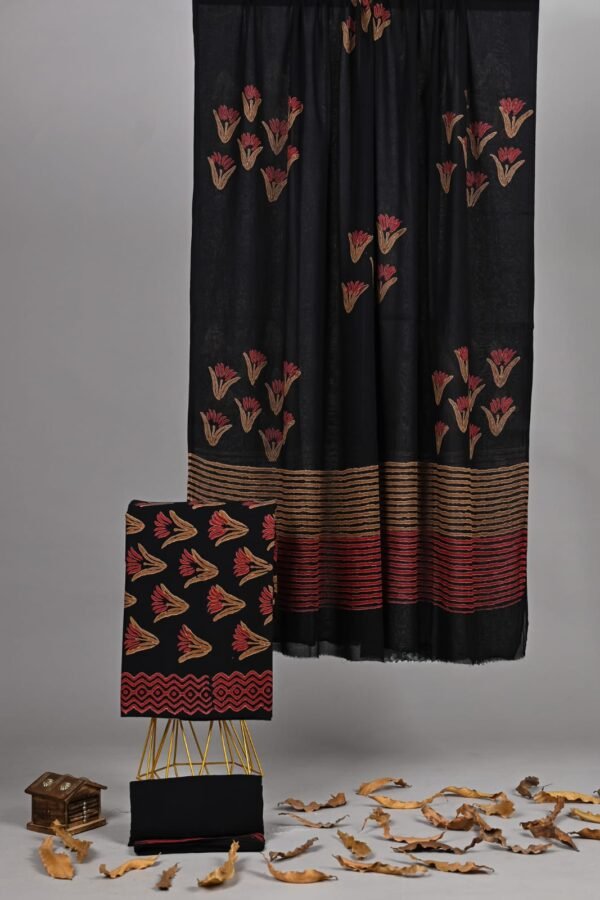
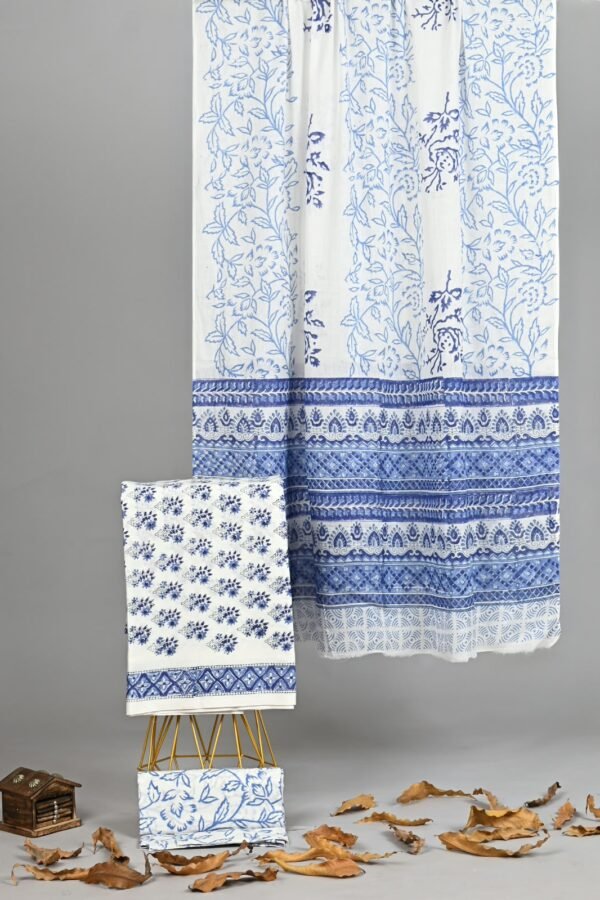
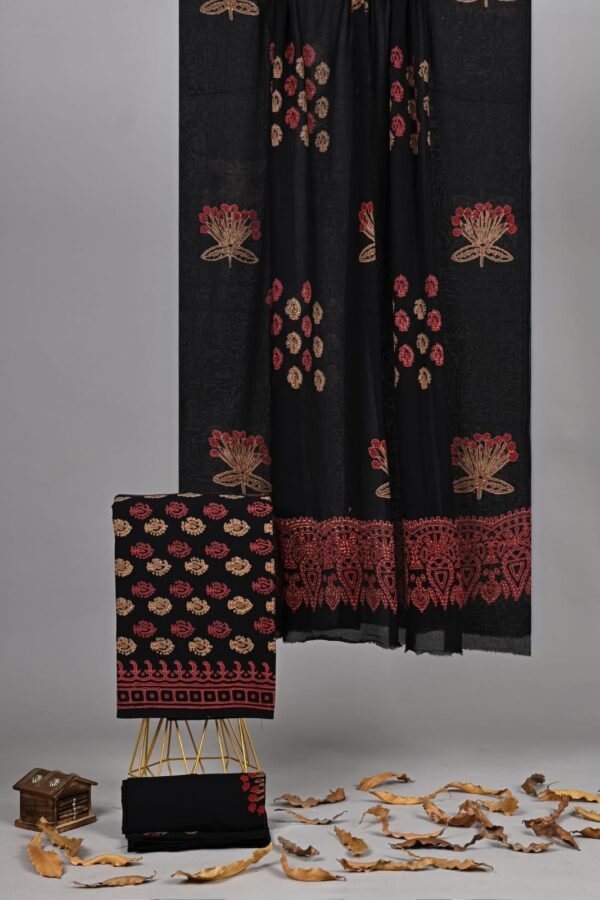
Each cotton suit set is unstitched and contains three pieces, 2.5 metres each:
- Top — 2.5 m hand block printed 60×60 cambric cotton
- Bottom — 2.5 m 60×60 cambric cotton in a coordinating shade
- Dupatta — 2.5 m soft cotton, hand block printed
That is 7.5 metres in total, enough for a kurta, a salwar or churidar, and a full-length dupatta. Any set that differs is stated on its own product page.
What Does 60×60 Cambric Mean?
Cambric is a tightly woven plain-weave cotton with a smooth surface and a little crispness. The 60×60 refers to yarn count in the warp and weft. Higher counts mean finer yarn: mulmul typically runs 80 to 100 and feels feather-light, while cambric at 50 to 60 is slightly heavier and holds its shape better.
That difference matters when you stitch. Cambric gives clean lines on a straight kurta and takes a crisp pleat on a salwar, where a lighter mulmul would need lining to hold structure. It is also more durable through repeated washing, which is what you want in a suit you plan to wear weekly.
Cotton and Mulmul Dupattas
Mulmul, mul, muslin and voile are all names for the same plain-woven cotton base — the difference between them is yarn count and finish rather than a different fabric. A finer count gives a lighter, more translucent dupatta that drapes softly over the shoulder.
Our dupattas here are soft cotton, hand block printed to match or contrast with the top. If you want a sheerer dupatta with more fall, our Kota Doria sets use an open-weave cotton-silk dupatta instead.
Printed by Our Own Artisans in Bagru
Every piece in this collection is hand block printed by our own artisans in Bagru, Rajasthan, using hand-carved wooden blocks and natural dyes. The blocks are pressed by hand, one repeat at a time, across the full length of the cloth.
This explains the small irregularities you will find. A faint join where two impressions meet, one motif slightly deeper in colour than its neighbour, a subtle shift in dye across a length. These are the signature of a hand-printed textile, not defects. A screen or digital print would be flawlessly uniform, and it would look it.
Why Unstitched Cotton Suits
Ready-made ethnic wear forces a compromise somewhere — sleeve length, kurta length, or fit through the shoulder. Unstitched cotton suit material removes it. You are paying for cloth rather than for stitching, sizing and labelling somebody else chose, and the set is cut to your measurements.
Cotton suit fabric is also the most forgiving to work with. Most tailors handle cambric confidently, and it takes alterations well if your fit changes.
Caring for Hand Block Printed Cotton
Hand wash separately in cold water with a mild detergent for the first few washes. Dry in shade, never in direct sun, and iron on medium heat. Some colour will release initially — that is the natural dye settling, and it eases after two or three washes. Do not bleach, wring or tumble dry.
Cotton shrinks a little on first wash. If your tailor is cutting a close fit, pre-wash the fabric before stitching.
Wholesale Bagru Print Cotton Suits
We supply hand block printed cotton suits at wholesale rates to boutiques and resellers across India, printed in our own unit in Bagru. We also allow dropshipping — if you sell through Instagram, Facebook or WhatsApp, message us and we will add you to our broadcast group, where new collections are shared daily. Contact us on WhatsApp for wholesale rates and order quantities.
Frequently Asked Questions
How much fabric is in a cotton suit set?
2.5 metres each of top, bottom and dupatta — 7.5 metres in total. Any set that differs is stated on its product page.
What is 60×60 cambric cotton?
It is a tightly woven plain-weave cotton with 60-count yarn in both warp and weft. It is smooth, slightly crisp, holds its shape better than mulmul, and is durable enough for regular wear.
Is the dupatta the same fabric as the suit?
The dupatta is soft cotton, hand block printed to match or contrast with the top. It is a lighter cotton than the 60×60 cambric used for the top and bottom.
Are these suits stitched or unstitched?
Unstitched. You get the fabric for top, bottom and dupatta, to be tailored to your own measurements.
Will the colour run?
Some colour release in the first two or three washes is normal with natural dyes and settles after that. Wash separately in cold water to begin with.
Does cotton shrink after stitching?
Cotton shrinks slightly on first wash. If you want a close fit, ask your tailor to pre-wash the fabric before cutting.
Do you sell cotton suits wholesale?
Yes, to boutiques and resellers across India, with dropshipping available. Message us on WhatsApp for rates.
Explore More
For a sheerer dupatta with more drape, see our cotton suits with Kota Doria dupatta. For something dressier, our Maheshwari silk suits and Chanderi silk suits use silk-cotton handlooms. The Kota Doria suits are our lightest for summer, and the linen cotton suits have more texture. Or browse all our hand block printed suits.