Ajrakh & Vanaspati Ajrakh Pure Modal Silk Sarees
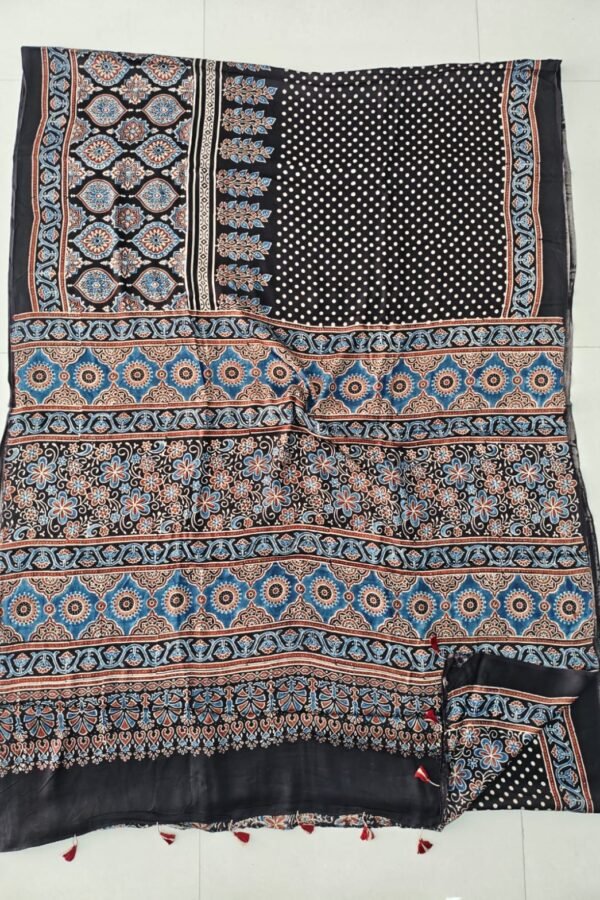
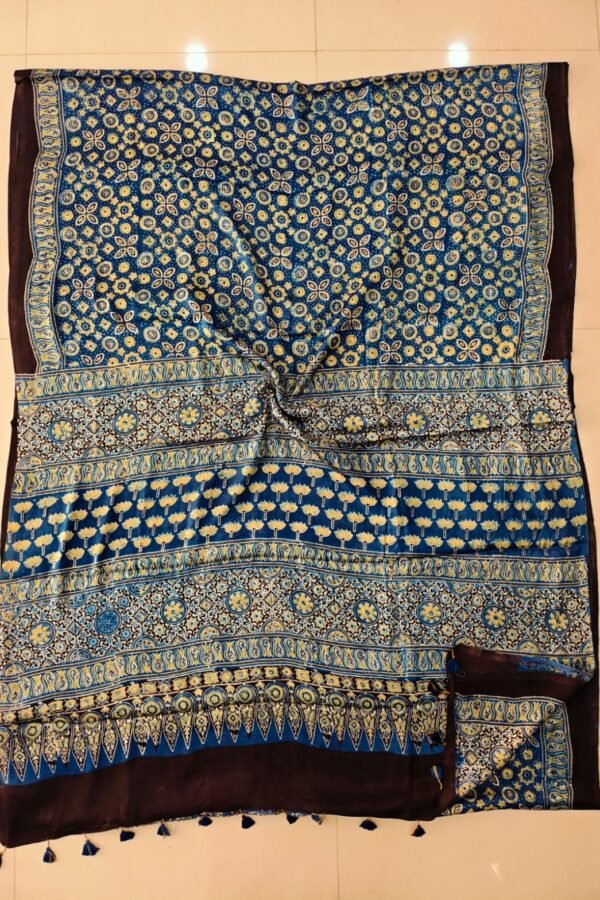
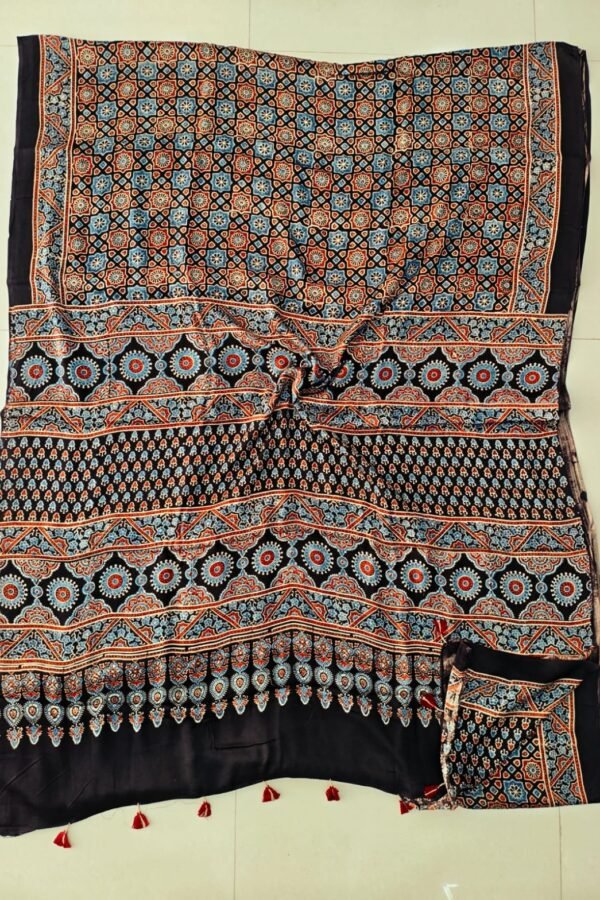
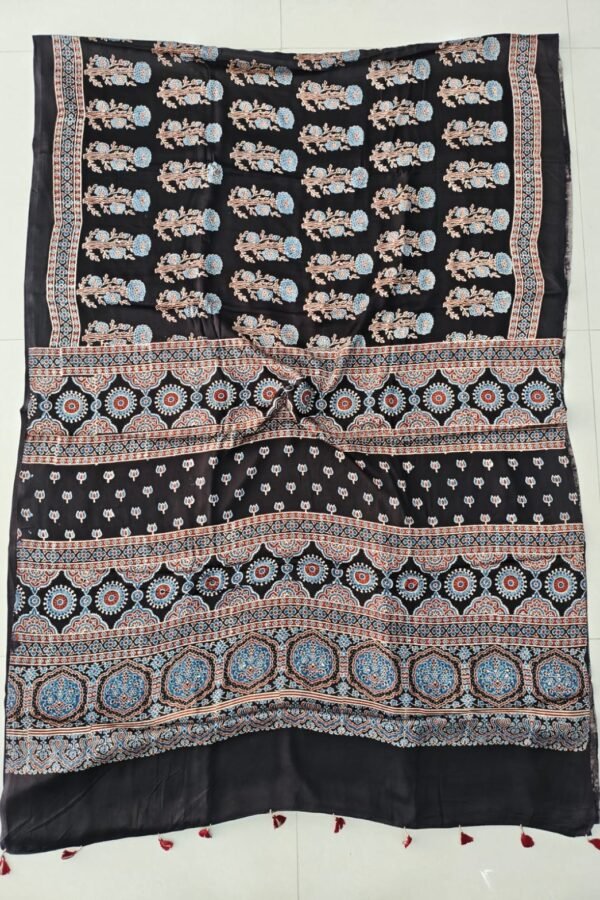
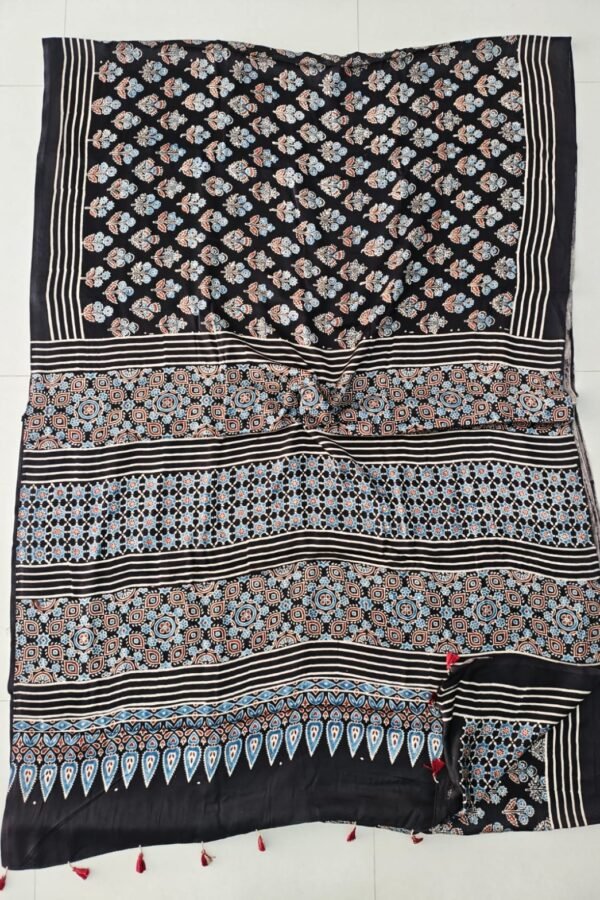
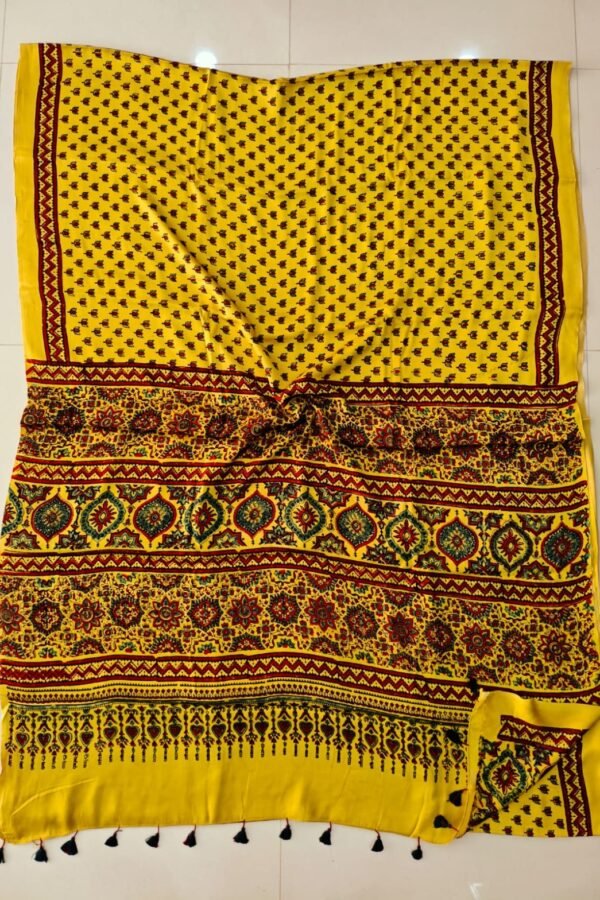
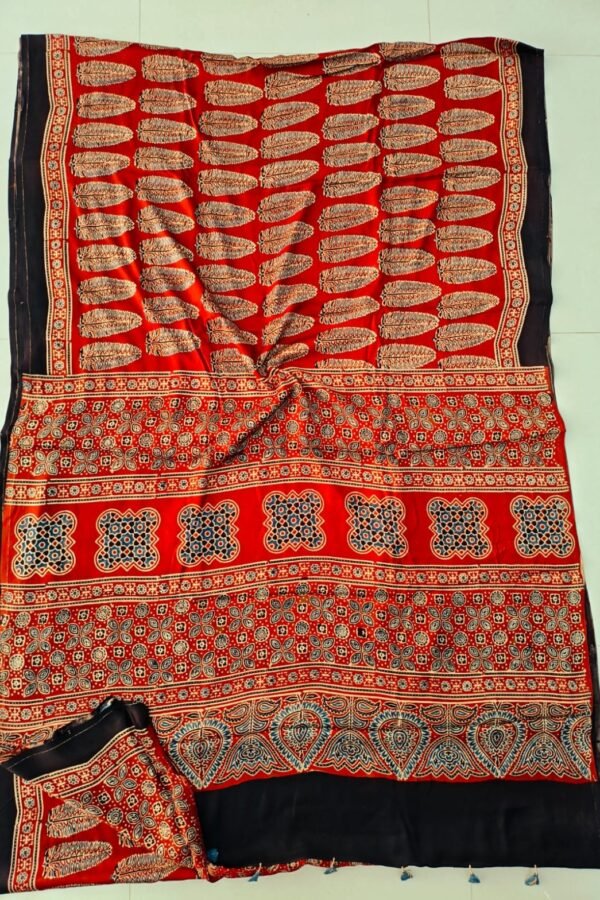
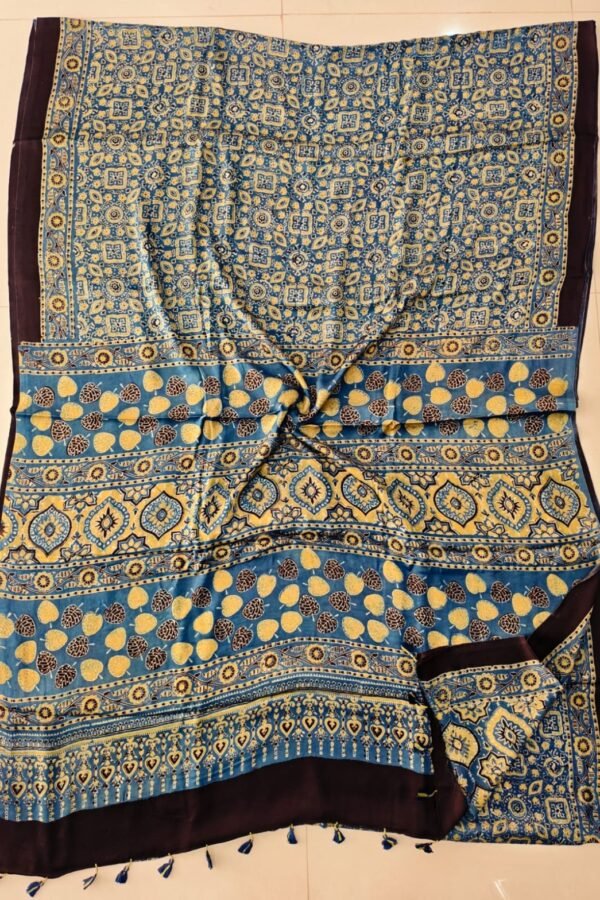
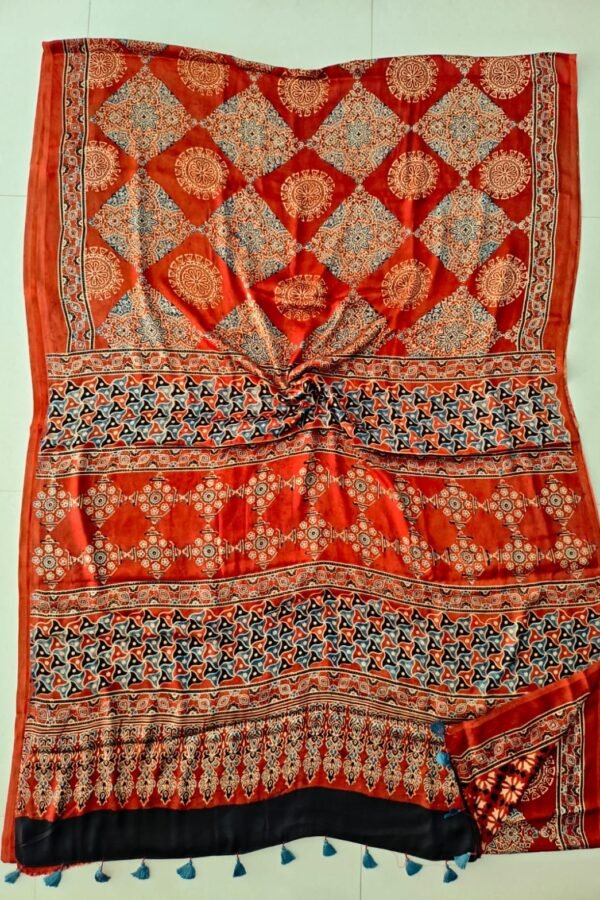
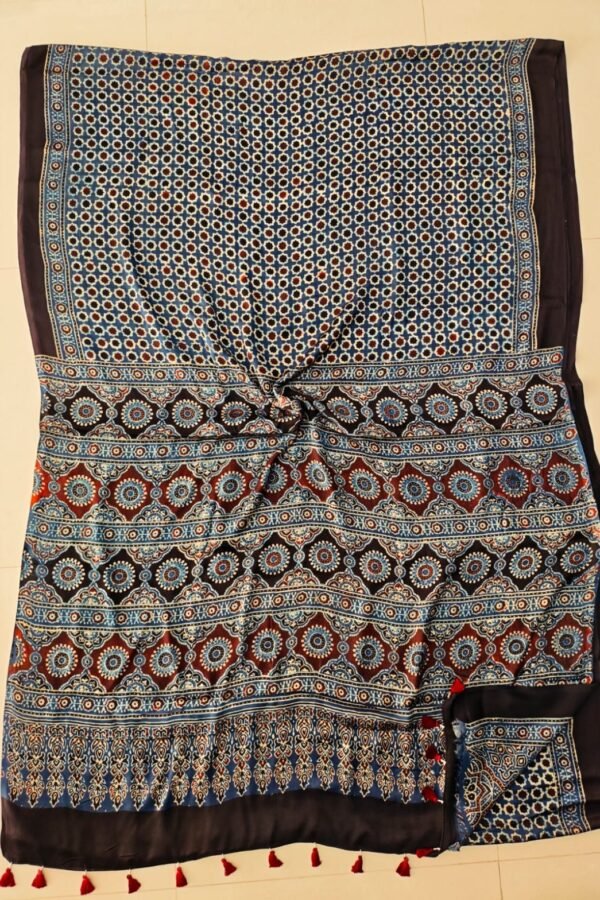
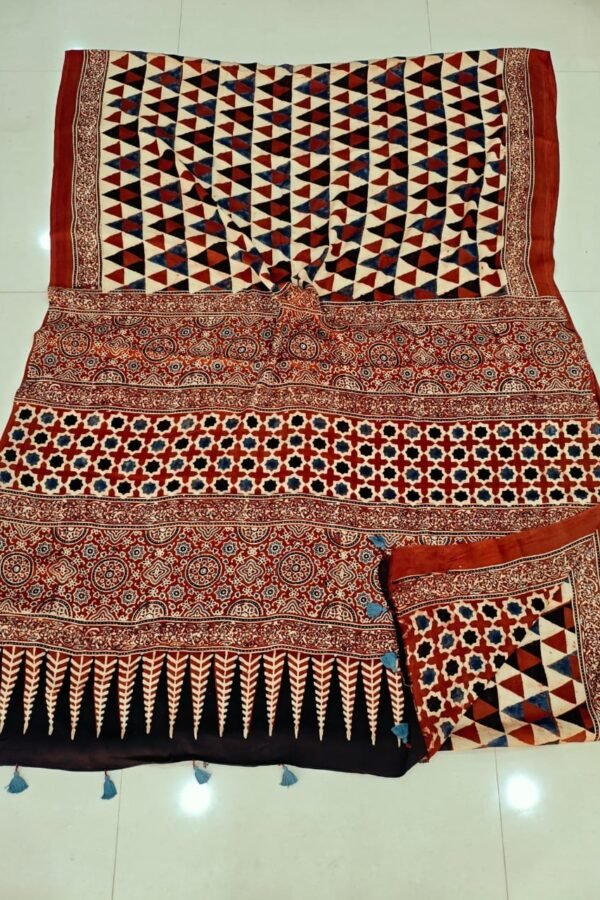
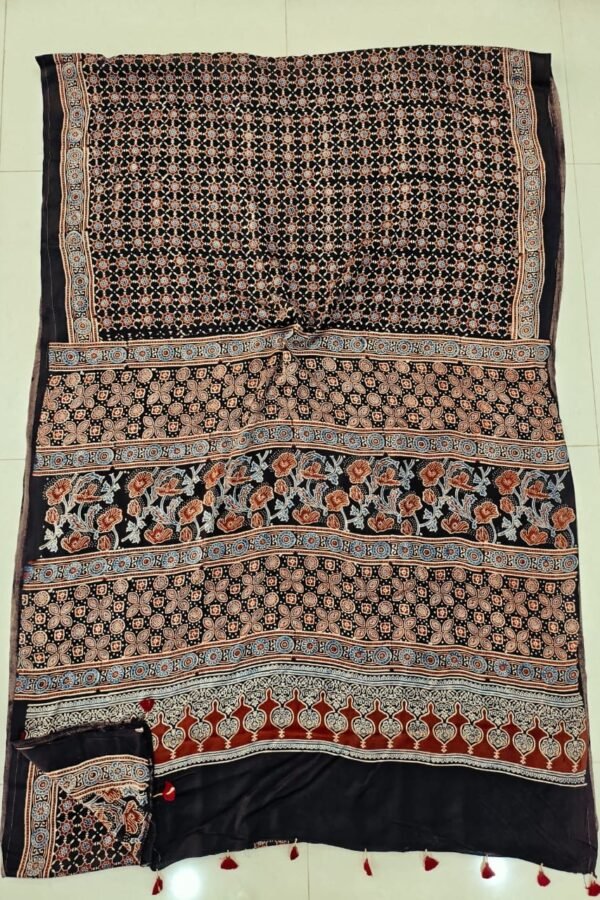
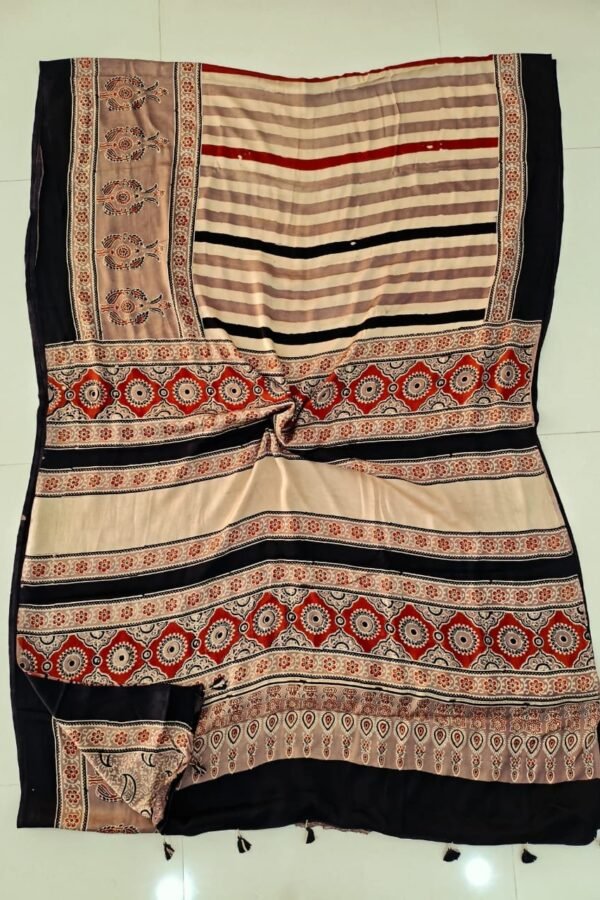
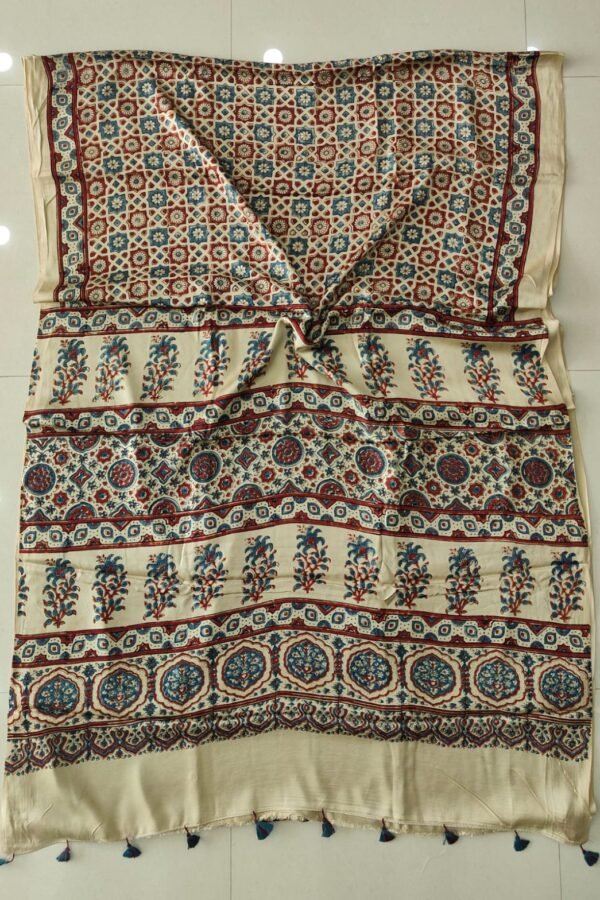
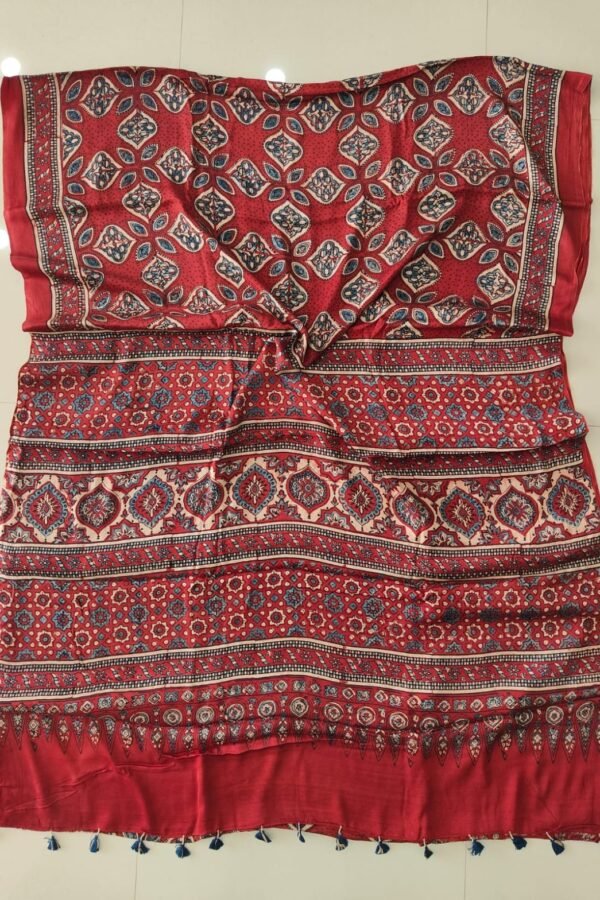
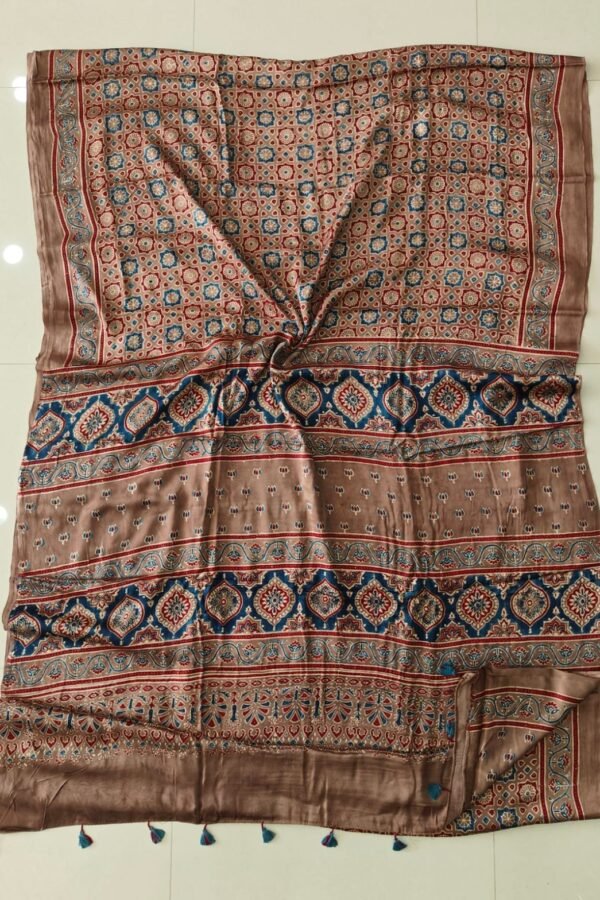
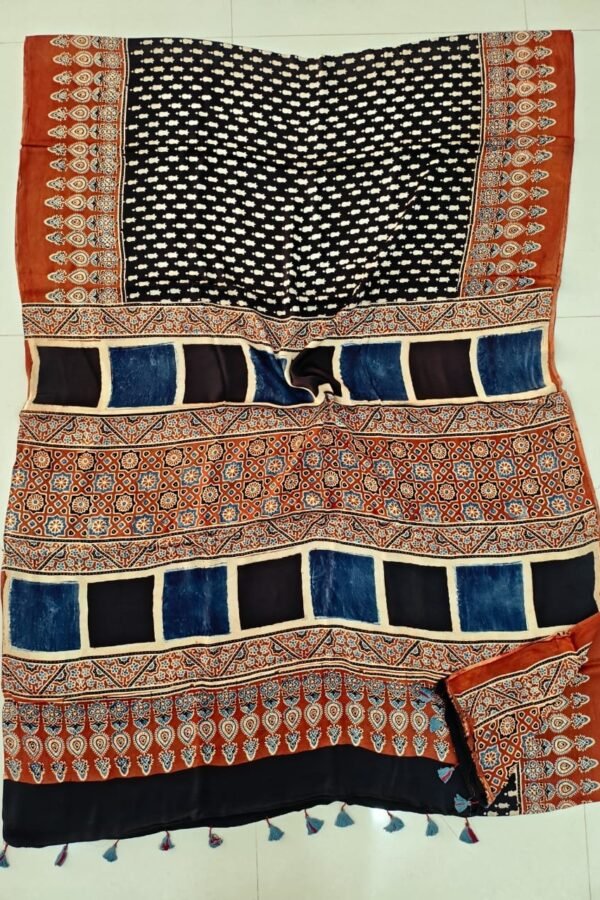
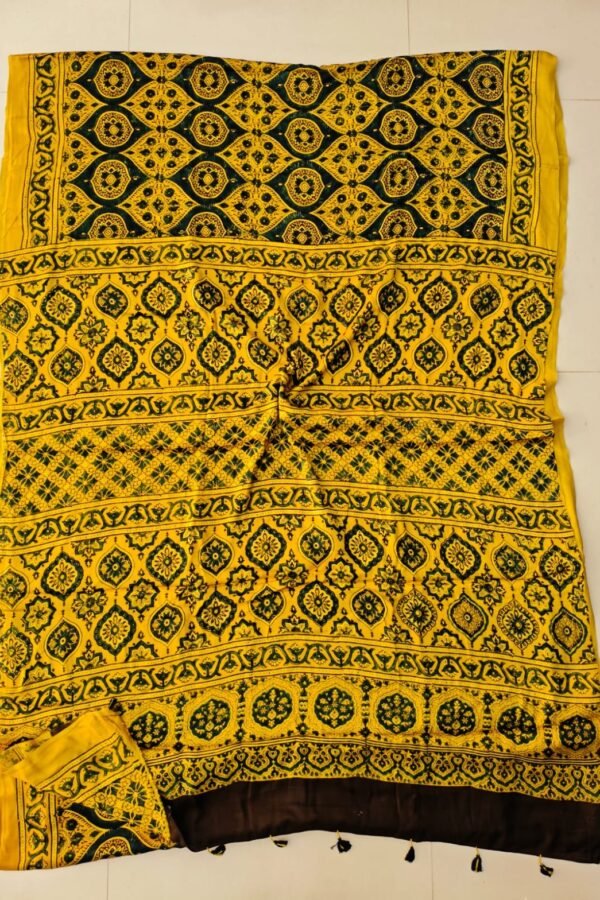
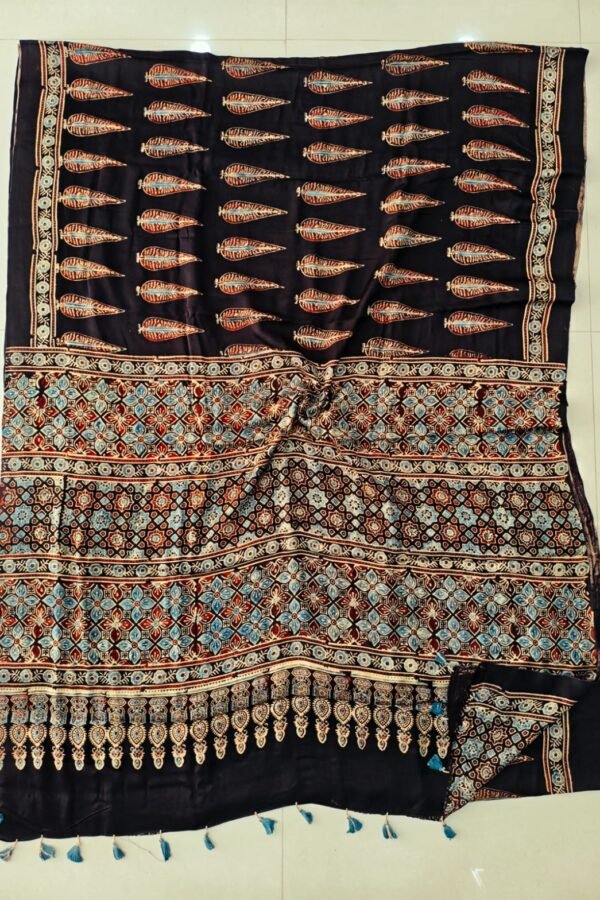
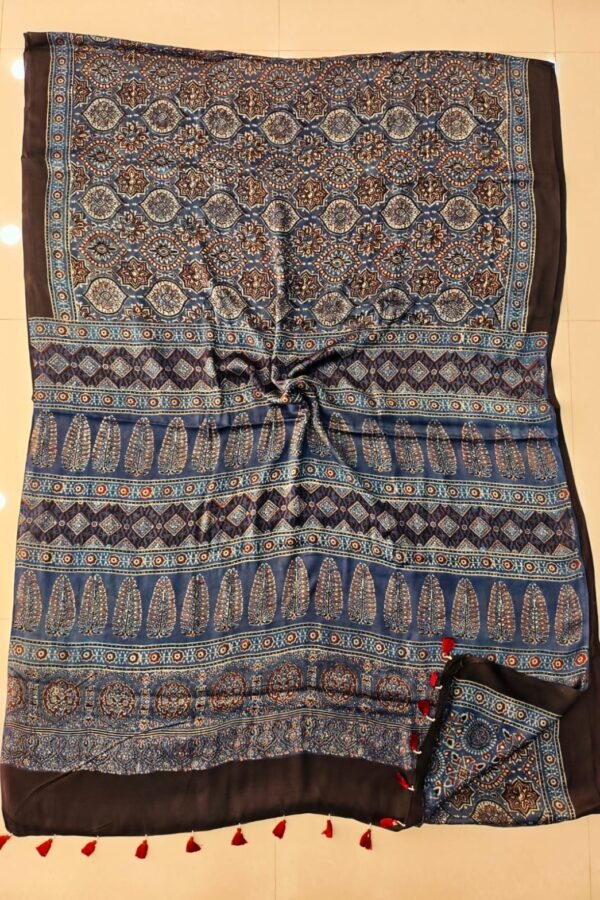
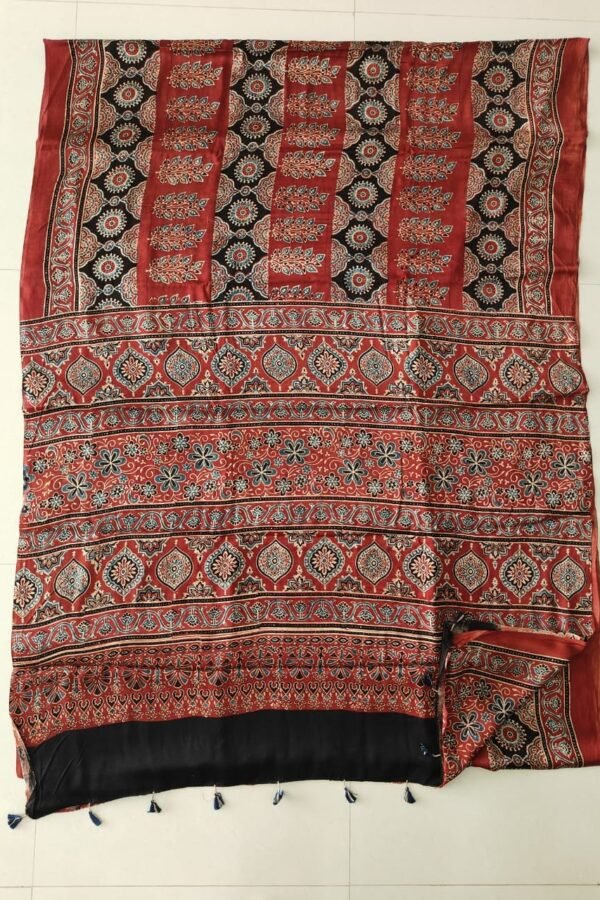
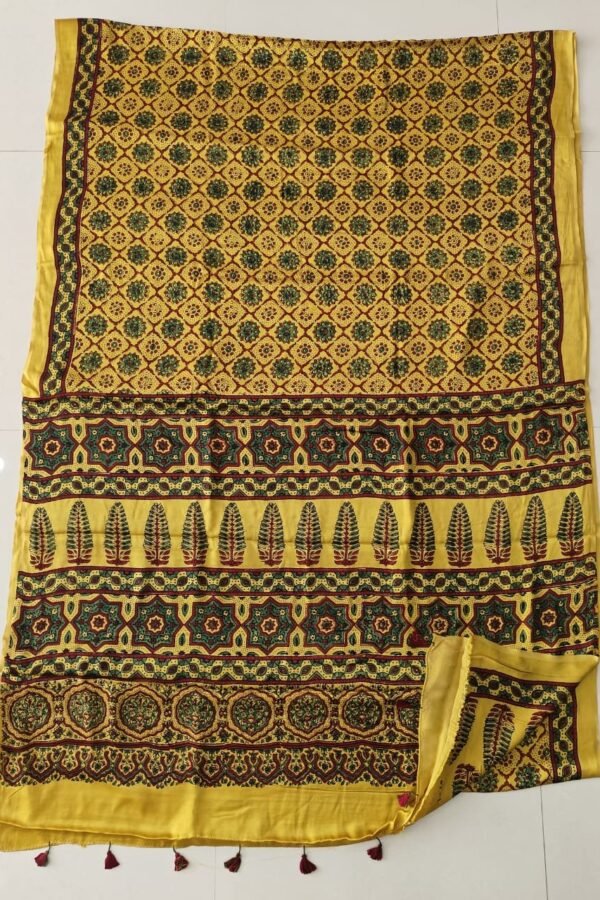
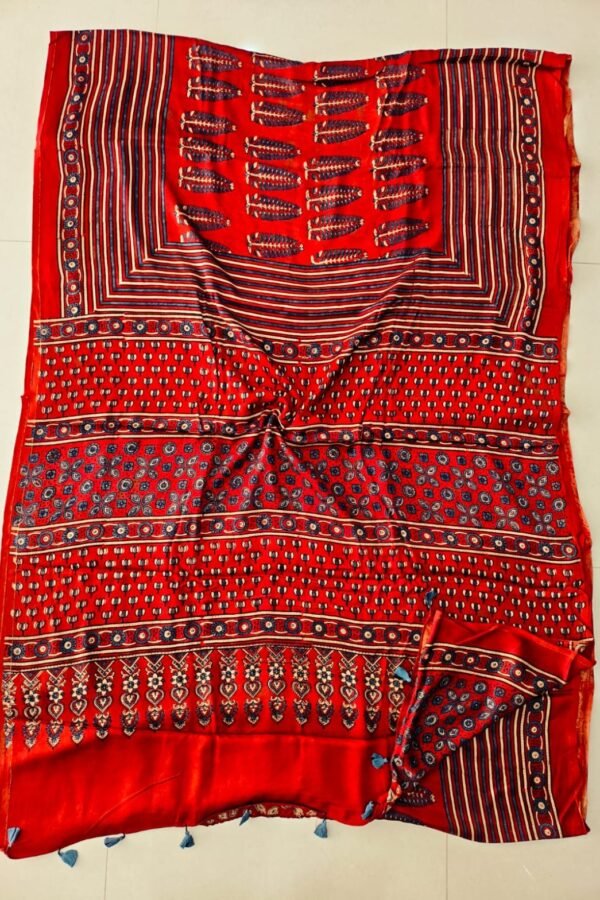
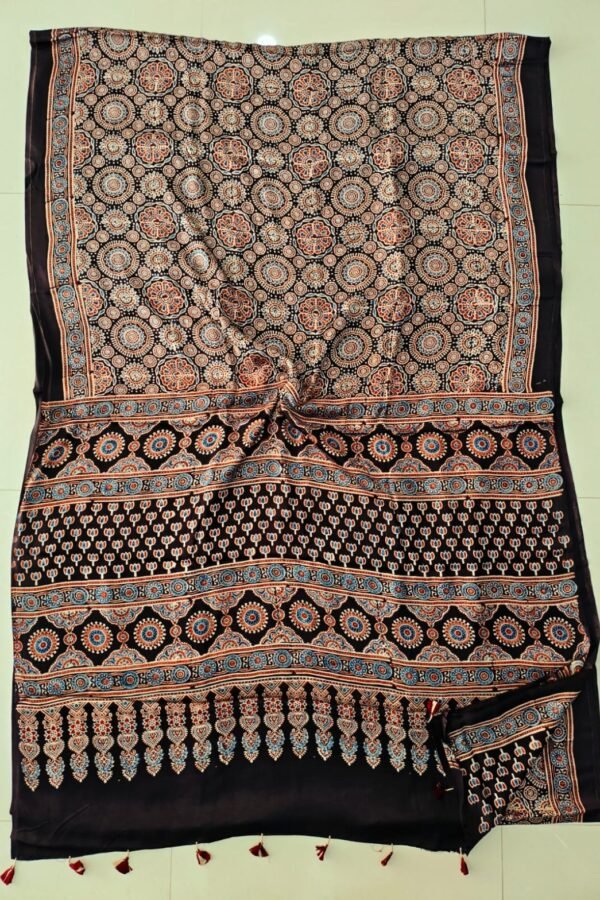
This collection brings hand block Ajrakh printing to modal silk Blend(75% modal, 25% silk) — a soft, smooth fabric with a natural sheen and light drape. Every saree is printed by hand using traditional Ajrakh techniques by our artisans in Bagru, including Vanaspati Ajrakh, where the dye itself is entirely plant-based. Ajrakh is a centuries-old resist-printing tradition rooted in the Kutch and Sindh region, known for its intricate geometric patterns and deep, earthy colour palette — indigo, madder red, black, and off-white are the classic Ajrakh tones.
Understanding These Sarees
The fabric is a modal silk blend — 75% modal, 25% silk — which gives the saree a smooth, glossy surface and a soft, flowing drape. Ajrakh printing is a resist-dyeing process using hand-carved wooden blocks, applied in multiple stages of printing, washing, and dyeing to build up the layered pattern and colour. Vanaspati Ajrakh takes this further by using entirely plant-based, vegetable dyes rather than any synthetic colour — the word "Vanaspati" itself means "of the plants." Because both are genuinely hand-applied, multi-step processes, small variations in pattern alignment and colour depth are a natural part of the craft, not a flaw.
What Makes This Collection Special
Ajrakh's geometric, symmetrical motifs on the smooth surface of modal silk create a look that's distinct from the same print on cotton — the fabric's natural sheen gives the pattern more depth. Vanaspati Ajrakh pieces go a step further, using only plant-based dyes throughout. Every saree includes a matching blouse piece; this collection doesn't include a zari border, keeping the focus on the print and fabric itself.
Designs, Colours and Styles
Ajrakh's traditional palette runs through indigo, deep red, black, and off-white, built up through the resist-dyeing process into intricate geometric and botanical motifs. Vanaspati Ajrakh pieces tend toward the same earthy, plant-dye tones — indigo, madder, warm browns. As with any hand-printed saree, check the individual product page for the specific colour and motif of the piece you're looking at.
How to Style These Sarees
Modal silk's smooth, glossy drape and Ajrakh's structured geometric prints work well for festive wear, wedding functions, and formal office wear alike. A plain or subtly contrasting blouse tends to let the Ajrakh pattern stand out.
Buying Guide
A few things worth checking before you choose: this is a pure modal silk fabric — 75% modal, 25% silk — not cotton, so expect a smoother, glossier feel than our cotton collections. Each saree is 6.5 metres including a 1-metre blouse piece. This collection does not include a zari border. Ajrakh and Vanaspati Ajrakh are related but distinct — Vanaspati Ajrakh uses entirely plant-based dyes, while standard Ajrakh may use a mix of natural and mineral dyes — check the individual product listing for which applies to the piece you're looking at.
Care Instructions
For the first few washes, dry cleaning is recommended to help the print and dye set fully. After that, hand wash separately in cold water, dry in shade, avoid wringing, and iron on low heat. Please refer to the individual product page for any piece-specific care notes.
Explore Related Collections
For our full range of hand block printed sarees, browse the complete Sarees collection. To understand more about Ajrakh's origins and technique, see what Ajrakh hand block printing is and how it's done If you're comparing fabrics, our Chanderi silk-cotton sarees collection offers a different weight and texture.
Explore the collection to find the Ajrakh piece that fits your wardrobe.
Frequently Asked Questions
Is this a pure modal silk saree — what does 75% modal, 25% silk mean?
Yes, this is a pure modal silk saree, made from a fabric blend of 75% modal and 25% silk. This combination gives the saree a smooth, glossy surface with a natural sheen, along with a soft, flowing drape.
What's the difference between Ajrakh and Vanaspati Ajrakh?
Both are hand block resist-printing techniques rooted in the Kutch and Sindh tradition, applied here by our artisans in Bagru. Standard Ajrakh may use a mix of natural and mineral dyes, while Vanaspati Ajrakh uses entirely plant-based, vegetable dyes throughout — "Vanaspati" itself means "of the plants." Check the individual product page to see which technique applies to the saree you're looking at.
How should I wash an Ajrakh modal silk saree?
For the first few washes, we recommend dry cleaning to help the print and dye set fully. After that, hand wash separately in cold water, dry in shade, avoid wringing, and iron on low heat. Please check the individual product page for any piece-specific care notes.
Does this saree have a zari border?
No, this collection does not include a zari border. The focus here is on the Ajrakh print and the natural sheen of the modal silk fabric itself.
Is the blouse piece included?
Yes, a matching blouse piece is included with every saree. The total length is 6.5 metres, including a 1-metre blouse piece.